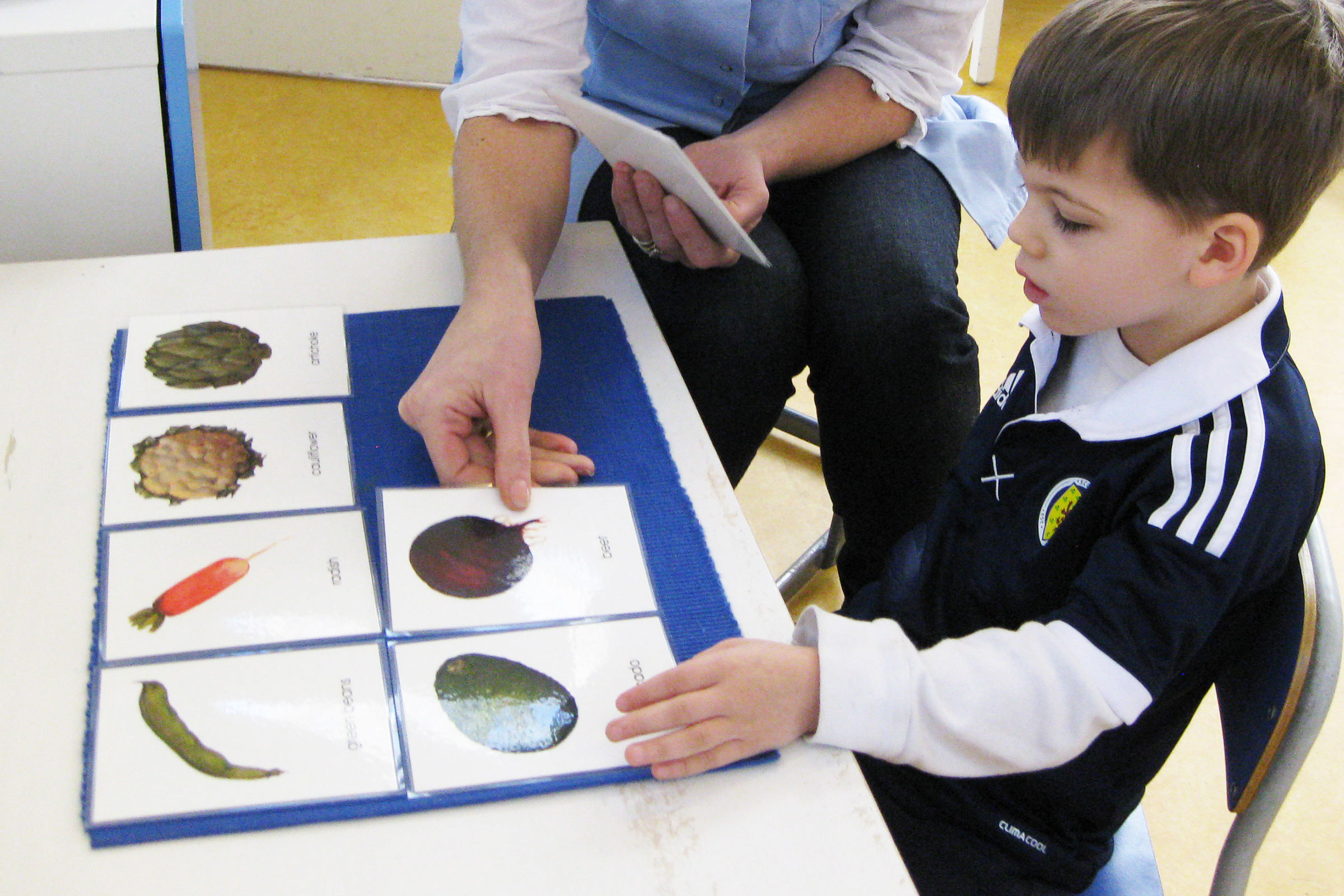
It is advisable that one adult speak only one language – especially for children under 6. A child can easily absorb more than one language just as the child can absorb many different things. Once the child is fluent in one language, is perhaps writing and reading in one language, adults can generally play language games with children, asking: “Do you want the names today in French or English?” As a child moves toward 5 they realize that many people can speak more than one language.
This can happen earlier if the child lives in a multilingual social environment – or even in a family where the adults speak different languages. Mom speaks Italian, Dad speaks English. Children absorb language as just a characheristic of the person – along with other characteristics. Becoming bi-lingual in a monolingual world offers a few additional challenges but they are challenges that most children can undertake.
If adults in an environment speak different languages, one thing they can each do is vocabulary enrichment work – with the separate languages. Perhaps there is a set of vocabulary enrichment cards on vegetables. Each adult can use the same set of unlabelled cards to do 3-period lessons with their native language. This allows for an incrase in the vocabulary of both languages but this does not create fluency. To become fluent, the child must hear the normal language spoken in a natural way as a communication tool – not as a lesson.
Children can learn to count, can sing some songs, perhaps greet each other in a language different from their mother tongue but this is very different than being bilingual. These activities can give a type of exposure but should never be “advertised” as offering a second language.