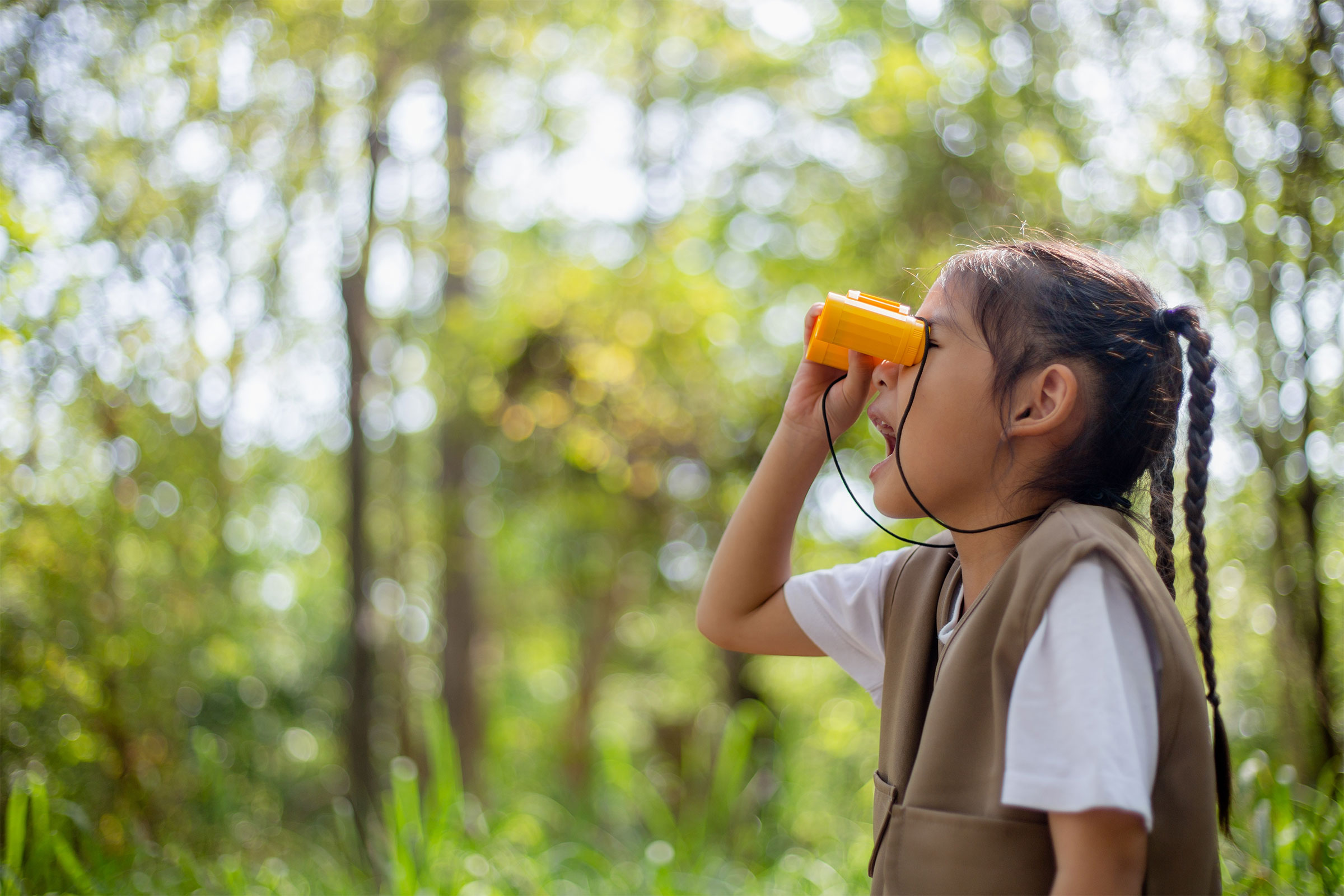
First of all, there is a difference between the imagination and fantasy. Using the imagination is to be able to think about what could have happened in the past— or what could possibly happen in the future. This ability emerges usually during the 5–6-year-old period – and is heavily evident in the 6-12 years. In fact, imagination is one of the predominant characteristics of a second plane child.
Based on learned factual information, absorbed/learned during the first 6 years, a child, when developmentally ready, can imagine the past and project into the future.
Fantasy, in contrast, is not based on reality. It is created by program developers/people who manipulate images that capture a child’s attention. Children also can create fantastic situations—especially when bored or the reality of their life does not offer reality-based experiences. So a fantasy world is better than the reality of the world they live in.
I think of a child under the age of six who has an imaginary friend and has an imaginary tea party for the two of them. When I witness something like this, I usually question what is missing in the child’s life. Do I stop the activity? NO, but I do, through conversations, through presentations of “grounding” activities try to connect the child with their real life. Young children are quite capable of escaping into a fantasy world at a time when they should be discovering the wonderful things in the real world.
Elementary-aged children don’t fantasize as much (unless they want/need to escape the reality of their life) and their imaginary play is most often based on realistic information or lived experiences. They can imagine what it might have been like to live as an Inuit person and act out a scenario based on their understanding of traditional Inuit life. They can also create plays that explore life in a different era or in another country.
We strive to give the child under six as much factual information as they are interested in. This sets the foundation for a use of true imagination during the elementary years.