Montessori for Everyone, Everywhere, All the Time
In 2018 the number of people in the world over 65 outnumbered children under five for the first time. Some may have thought this constituted a crisis for an educational philosophy best known for early childhood education. For AMI, it was an opportunity to reflect on the impact of Montessori philosophy across generations and its potential as a unique aid that is relevant to every individual.
It is intentional that our vision considers the “..natural development of human beings throughout their lives” and that we “..aim to fulfil the right of children and adults around the world to have access to nurturing, developmentally appropriate, educational environments.” Maria Montessori said that, “All mankind forms a single organism . . . a single, indivisible unit—a single nature” and we believe that this reflects a sense of inclusivity and unity throughout life.
Responding to an Ageing Population
The demographic shift to a world with more older people is considered an irreversible trend and by 2050 the number of people over 60 will have increased to 2.1bn which will be around 22% of the population. Early, broad-based responses are reflected in the United Nations declaration of the decade of Healthy Ageing (2021-2030) and the Healthy Ageing Collaborative’s aim “to promote and strengthen multisectoral and multi-stakeholder partnering to foster healthy ageing.” The four key action areas noted are combatting ageism, creating age-friendly environments, providing integrated care and ensuring access to long-term care when needed.
Montessori for Dementia, Disability and Ageing (MDDA) has been developing since 2014 to support older adults and people living with dementia and disability, by creating a prepared environment that offers dignity and respect while supporting independence. In July 2025, Day Poppy Service of Japan became the first care community in the world to be accredited under MDDA’s unique Global Accreditation Programme, which recognises adult care services providing Montessori environments. AMI training of qualified practitioners is accelerating and we are delighted to see other Montessori organisations engaging in this vital work.
It has also been heartening to see the growth in intergenerational spaces where older adults and children can mix and which Generations United, along with many other organisations, see as “the way of the future”. In New Mexico, the Montessori ONE Academy, an AMI recognised school, has been a trail-blazer in its link with AMARAN Senior Living to enable students to engage with older residents. In her wonderful article on “Mixed Ages in the Montessori Environment” Molly O’Shaughnessy considered the value of “society by cohesion” and noted the work of the Centro Tyrone Guzman incorporating Montessori principles to create “a holistic and intergenerational approach to education, health, and wellness.”
Not Leaving the Young Behind
Children born today will live in a world with an ageing population which makes the work on intergenerational understanding particularly important. However, Africa is expected to see increases in the number of 15–24-year-olds throughout the remainder of the 21st century. In its paper “Youth population trends and sustainable development” the United Nations notes that “many countries with rapidly growing youth populations are struggling already to educate their young people.”
Montessori is already playing a vital role in addressing this issue. In April 2021 the Indaba Institute worked with AMI to pilot Africa’s first Community Rooted Education (CoRE) teacher training programme (which had been running successfully for several years in India), in Stellenbosch, South Africa. Nelson Mandela famously said, "Education is the most powerful weapon which you can use to change the world" and CoRE is a key Montessori initiative that will make a significant and beneficial impact.
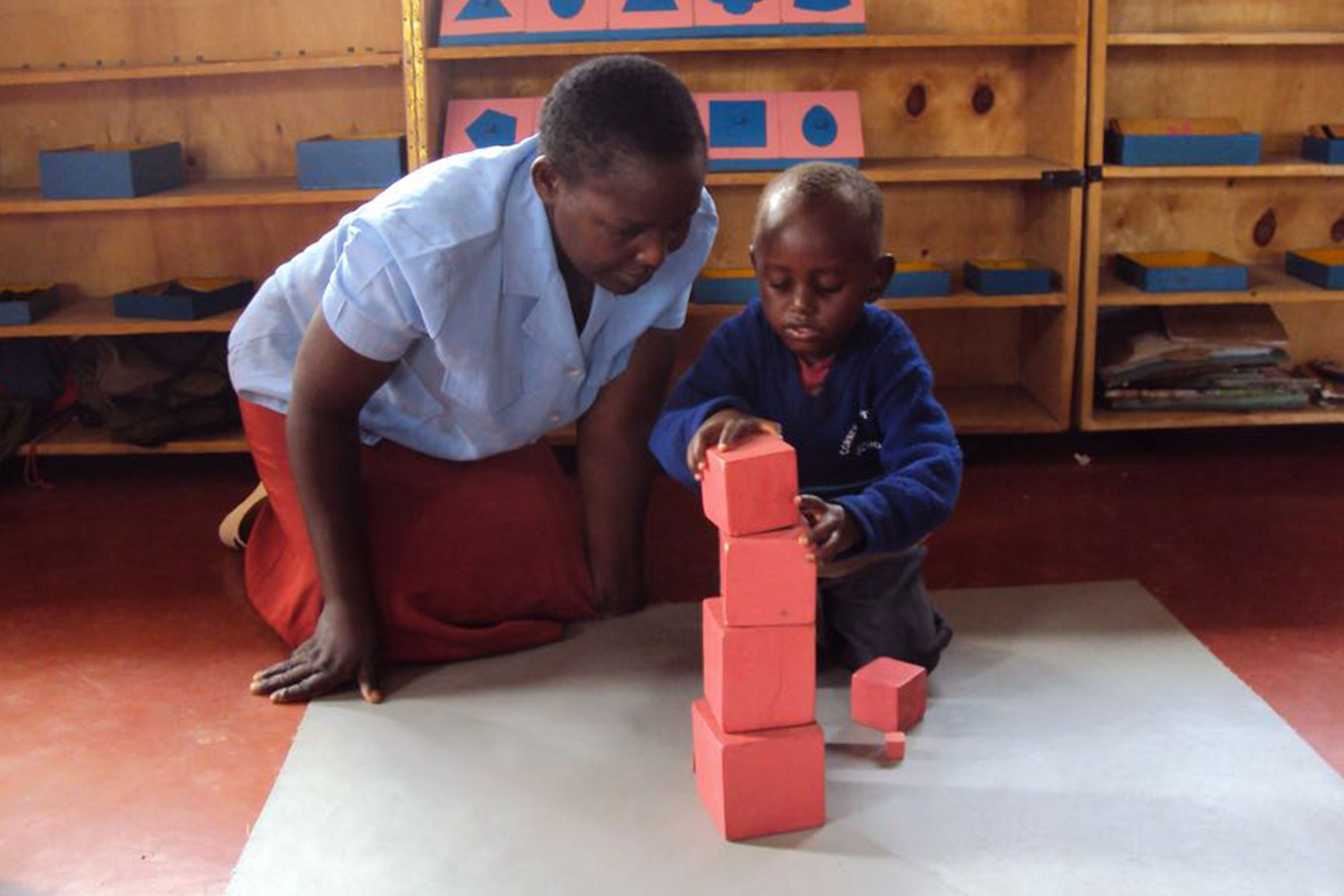
Further afield the AMI Outreach team along with training centres in Prague and London have worked with partners, including the Montessori Global Growth Fund, in Africa to train teachers in Malawi, Kenya, Nigeria and Namibia. The long-term development at Corner of Hope in Kenya has extended connections to Ethiopia, Uganda and Tanzania. Working with the Peter Hesse Foundation we help support schools and teachers in Ivory Coast and Senegal.
The 2022 Global Montessori Census suggested there are nearly 16,000 Montessori schools in more than 150 countries worldwide with some 9% government funded. It means that our community has a presence and the opportunity to influence education policy around the world. The unique capability of Montessori philosophy to build social cohesion across generations, to engage respectfully with different traditions and achieve the aim of peace through education is more vital than ever.
Meeting in the Middle
In recent articles I have reflected on the unique strengths of Montessori as a resource for improving mental health in young people, with benefits that extend throughout their lives, as well as the role that it plays in business thinking. When this is combined with the way it can be applied to education for the young and support for elders it is reasonable to wonder why Montessori remains unknown to or misunderstood by so many. This is a fundamental communications challenge our community needs to face with evidence, argument and a commitment to core principles.
There is undoubtedly a need to challenge the inertia and vested interests that sustain the traditional education paradigm. We also know there is a lack of protection for the use of the Montessori name and that it is important not to cede ground to initiatives that co-opt it for financial gain without due respect for the underlying principles. Parents and decision makers will make their choices but our community must be more forthright and much louder in making its case.
It is important to reflect on studies indicating why parents choose certain types of education and to do more research into the relatively unexplored territory of their levels of satisfaction. AMI’s Bold Goal initiative in the US was led by ground-breaking research with parents about their reasons for choosing Montessori and their reasons for leaving. It was a significant factor in developing our approach to training courses but it also flagged the great challenge – Montessori must do a better job of demonstrating its value.
The good news is that there is growing evidence that educators and decision makers around the world are embracing the potential for Montessori to make a difference. The successes of high profile Montessorians in business, the arts, sports, technology and science are increasingly recorded. The development of Montessori activity that is highly relatable to daily life in areas such as sport and cooking is all part of the popularisation of the philosophy.
A Montessori Future
When considering the future we should never forget that Montessori teaching remains very attractive to younger educators with our surveys showing that the largest single cohort of teachers starting AMI training is aged 20 to 30 and the majority are under 40. It is heartening to reflect that the primary motivation stated is to “to make a difference”. The demand for trained Montessori teachers is also very high which suggests that there is robust demand from schools who are trying to meet parental demand.
We would expect parents to take Montessori seriously as an option but there are, of course, people who do not have children and whose interest in different educational philosophies is limited or non-existent. Finding common ground can be difficult and it is important that we continue to align our work with the broader common good and Maria Montessori’s humanitarian zeal. Most people in the world share a desire for peace and justice and we might aim to persuade them that supporting Montessori education is a credible route to achieving those aims.
We might also do more to exemplify Maria Montessori’s vision that “the child is both the hope and a promise for mankind.” One example is the International Day of Peace Event staged by AMI’s north American affiliates in September 2024 which featured early career Montessorians who attributed their activism in seeking a better future to their education. This year’s event will see a reel of contributions from young people talking about their views on peace. Individuals who have the greater part of their lives and careers ahead of them are extraordinarily powerful advocates for change.
Lynne Lawrence (MBE), AMI Executive Director