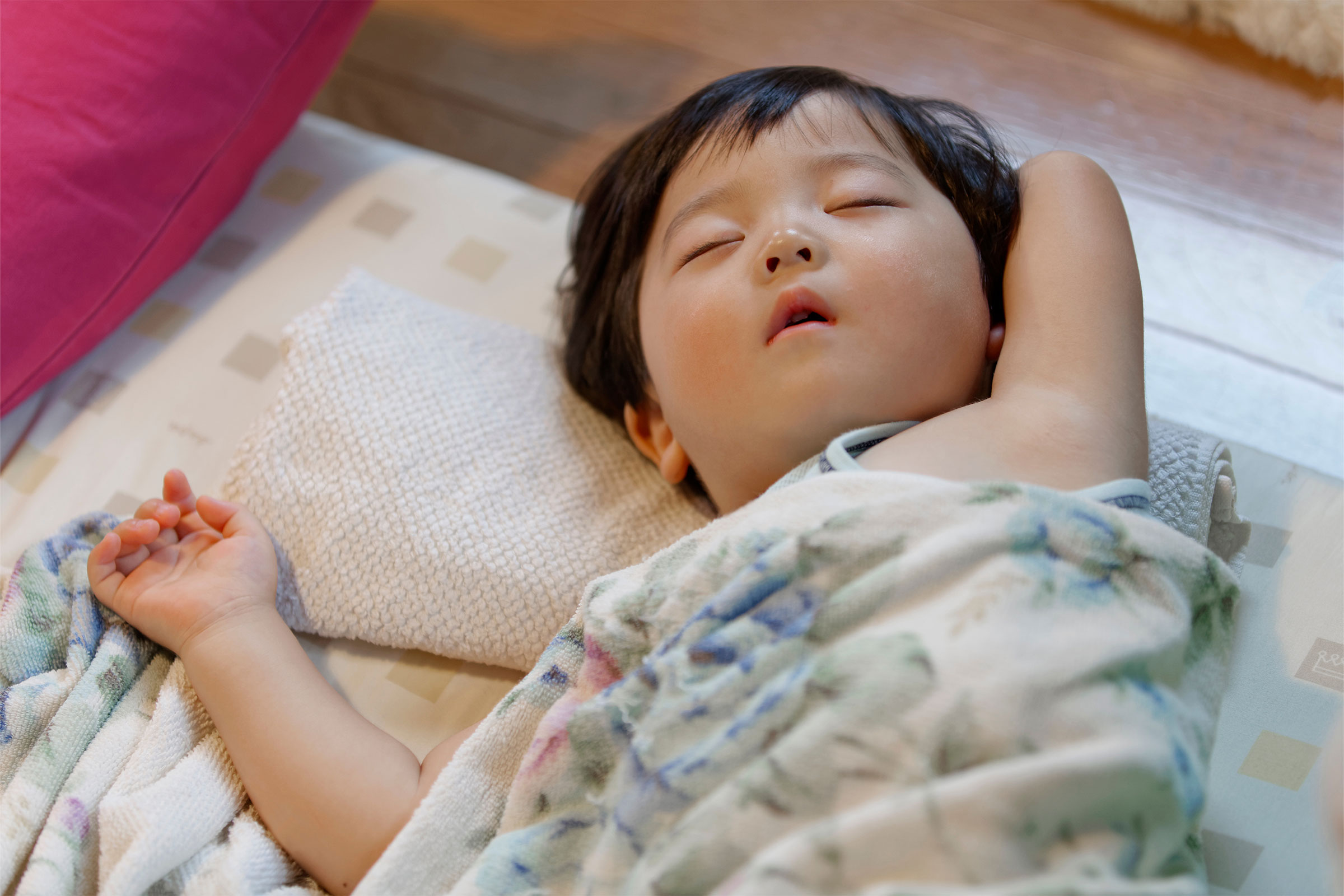
The answer to this question is determined by many variables: Sleep needs depend on the child’s own unique physiology and, as importantly, the lifestyle of the family. In childcare settings there is usually a regulation regarding naps for children under 5 years of age, location dependent. According to the American Academy of Pediatrics, children 1-2 years of age need 11-14 hours (nap and night sleep) while children from 3-5 years need 10-13 hours combined.
In families/cultures where the dinner time is latish, children are often up until 9:00 or 10:00 p.m. If they need to be awakened to get dressed, have breakfast, get to school by a certain time, then often they are not getting enough continuous sleep at night. This then means that at the school, children may be tired or need longish naps. This creates a vicious cycle.
In life situations where children are in bed around 7:00 p.m., awaken around 7:00 a.m. after 12 hours of sleep, their need for a nap begins to diminish after age 3. There is a transition when naps are being eliminated. Children are often sleepier earlier in the evening and thus need an early bedtime. During the transition from napping, children perhaps won’t nap for the first 3 or 4 days of the week and then badly need a nap on Friday.
As the variables are so many, it is impossible to have one hard and set rule. The bottom line is that we need to observe, perhaps keep a log, ask families to add to the daily log of their “at home sleep” and decisions regarding naps depend on the log and observations.
To acquiesce to licensing nap regulations, simply do not use the word “nap” with the children but use the word “rest.” All children under a certain age need to rest (by regulation!). Whether or not they sleep depends on their own physiological needs.