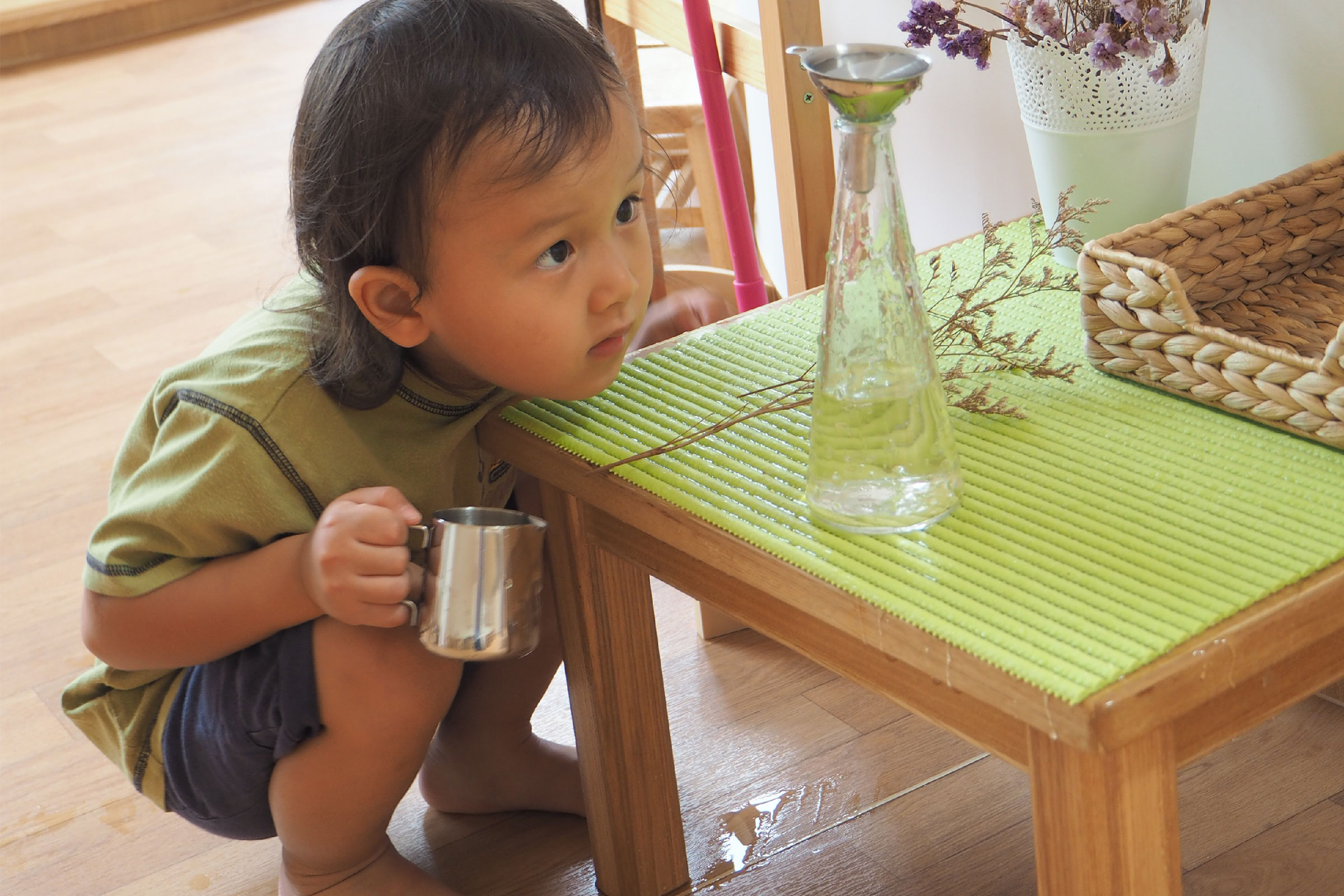
If we consider what we mean by a “work cycle” as being the time frame in which a child is doing some kind of constructive work, then the work-cycle is all day. A very wise 3-6 trainer once answered this question with: from the 1st step into the prepared environment (indoor or outdoor) until the last step out of the prepared environment. If we create an artificial time limit, e.g., 3-hours, we need to observe how that works in the environment.
Some days children work 2.5 hours, then a small group can be gathered for sing or be read to and then back to their own, freely chosen activity. When the children’s work is interrupted by a well-meaning adult and their freely chosen work has to be put away, only to have the entire group of children gathered for some kind of communal activity, chaos can often erupt. I find it difficult to believe that there are books that are equally appealing to all the children between 2.5 and 6+ years!
Preparing the room for lunch and the subsequent clean-up, having some time outdoors, tidying the room at the end of the day – all of these activities are children’s self-constructive activities.
All of this means we must return to an emphasis on observation. Are the majority of the children meandering around, unable to settle down? If yes, invite that small group of wanderers to a lesson – vocabulary, grace and courtesy, etc. Do the children intuit the end of the “work cycle” and refrain from taking out additional work as it will soon be time to gather? Could we not gather a small group of 3-4 children who cannot settle and give them lots of enrichment of vocabulary experiences? Does the fishtank need to be cleaned? How about the bird cage?
To limit our thinking of a “child’s work” to only working with the didactic materials, to only working with deep concentration, means that we need to do some reflecting on our observation skills, to do some planning of new and interesting projects. Do not limit your thinking to a “3-hour work cycle”.