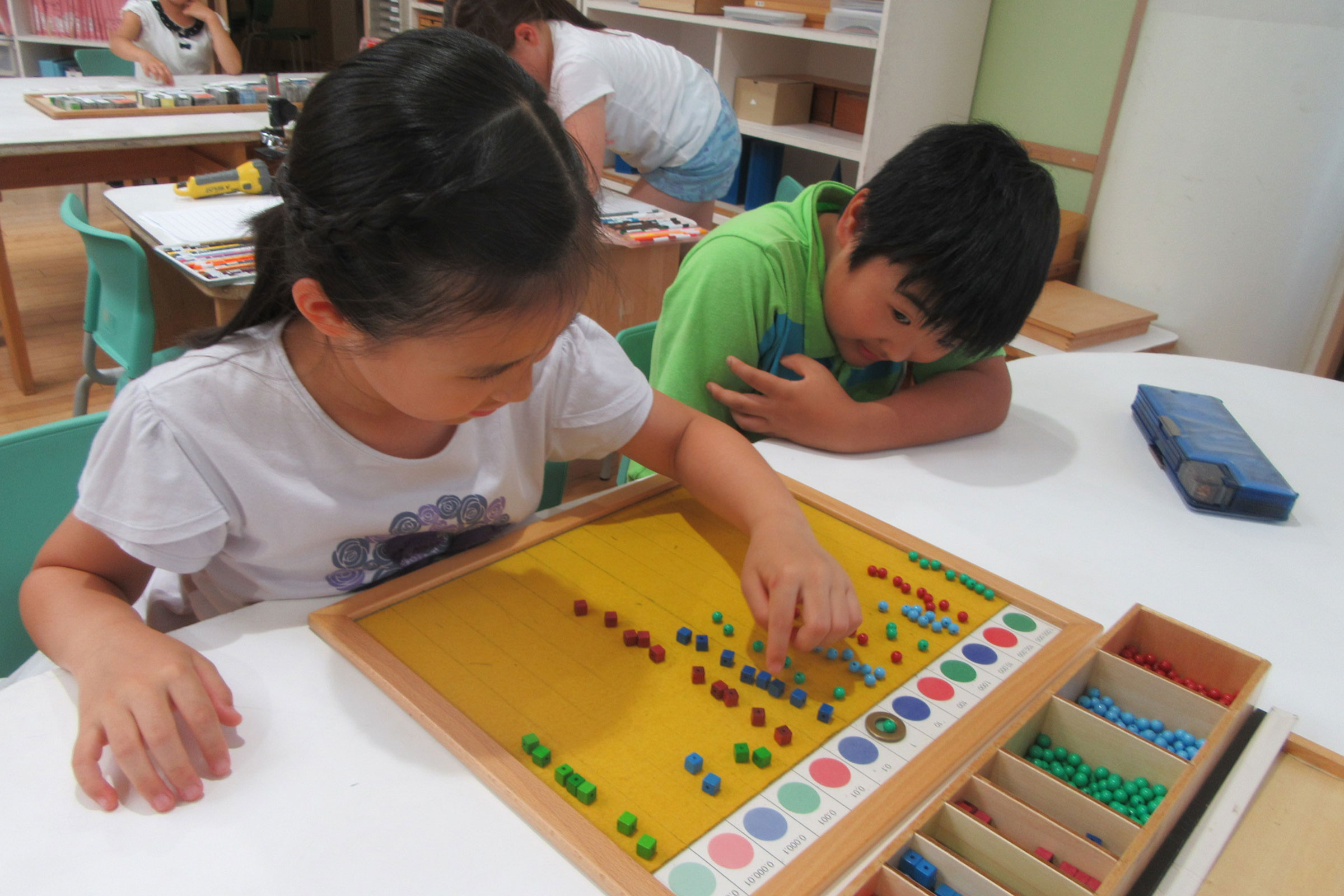
In Montessori education, the three year cycle is not simply a matter of organization. It reflects how development unfolds in the life of the child. Growth is gradual and continuous. It cannot be divided neatly into single year segments without losing sight of the deeper process that is taking place within the child.
Dr. Montessori observed that children construct themselves through activity, repetition, and meaningful relationships. For this construction to occur fully, the child requires time within a stable prepared environment. The three year cycle provides this time. It allows the child to become familiar with the surroundings, to develop confidence in the community, and to gradually assume greater responsibility for learning and for others.
Within the mixed age group, each child experiences a progression that is both personal and social. The child begins as the youngest member of the community, grows into a confident participant, and eventually becomes one of the older children who contribute to the well being of the group. This journey cannot be rushed. It requires continuity, patience, and trust in the developmental process.
First Year
In the first year, the child enters the environment as a newcomer. Everything is unfamiliar. The materials, the routines, the language of the classroom, and the expectations of the community are all new experiences. At this stage, the child observes carefully. There is a quiet period of orientation in which the child is learning how life in the community unfolds.
Much of the work of this first year is not immediately visible. The child is building a relationship with the environment and with the adult. Trust develops gradually as the child discovers that the classroom is a place of order, consistency, and respect. The child learns where materials belong, how to move carefully, and how to carry out tasks independently.
The presence of older children plays an important role during this period. Younger children watch with great interest as their older classmates work with concentration and purpose. Through observation and imitation, they begin to understand the rhythms of the community and the expectations that guide daily life.
During the first year, the child is primarily:
- becoming familiar with the environment
- developing trust in the adult and the community
- building the foundations of independence
This period of orientation lays the groundwork for all that follows. Without sufficient time to become comfortable and secure, the child cannot fully engage in deeper work.
Second Year
By the second year, the child moves within the environment with greater assurance. The classroom is now familiar. The routines have become part of daily life, and the child understands how to make choices and carry out work independently. This familiarity allows energy to be directed toward learning in a deeper way.
Repetition becomes especially meaningful. The child returns to activities that were introduced earlier, working with increasing concentration and control. Skills become more refined, and understanding becomes more secure. What was once tentative begins to feel natural.
Confidence often becomes visible in new ways. The child may begin to take initiative in choosing work, completing tasks, and caring for the environment. There is satisfaction in being capable, and this experience strengthens the desire to continue learning.
In the second year, the child is often:
- repeating work to gain mastery
- developing longer periods of concentration
- showing increased independence in daily tasks
- forming stronger relationships within the community
Relationships deepen during this time. The child begins to recognize a place within the group and to understand the responsibilities that come with belonging. There is a growing awareness that the classroom is a shared space that depends on cooperation and respect.
Third Year
The third year represents a time of maturity within the community. The child now has a history in the environment. There is a sense of ownership and familiarity that allows the child to move with confidence and independence. Many of the skills practiced in earlier years have become secure, creating the conditions for more complex and sustained work.
At this stage, the child often takes on a natural leadership role. Younger children look to the older ones for guidance, just as they once did. The older child demonstrates how to care for materials, how to resolve small difficulties, and how to contribute to the daily life of the classroom. These actions arise from the child’s growing sense of responsibility.
Helping others becomes an important part of learning. When the child shows a younger classmate how to complete a task, understanding is strengthened. Knowledge becomes more deeply rooted because it is shared. The child begins to see that individual growth is connected to the well being of the whole community.
In the third year, the child often demonstrates:
- confidence within the environment
- responsibility for the care of the classroom
- leadership through helping younger children
- a strong sense of belonging
The completion of the third year often reveals the full transformation that has taken place. The child who once entered uncertainly now moves with confidence and purpose. Independence is visible not only in academic work, but also in social behaviour, decision making, and care for others.
The Importance of Completing the Cycle
The three year cycle depends on continuity. Each year, new younger children join the community while older children remain to provide stability and guidance. In this way, the culture of the classroom is preserved and strengthened over time.
When a child completes the full cycle, the benefits are both academic and social:
- skills have been practiced repeatedly over time
- relationships have had time to deepen
- confidence has grown through real experiences of success
- leadership has developed through contributing to the community
The three year cycle reminds us that education is a process that unfolds over time. It invites adults to trust in the steady work of development and to recognize the value of allowing the child to experience the full journey from newcomer to capable member of the community.
Sandra Girlato, AMI 3–6 Trainer