The Montessori Method has long been recognised as a revolutionary approach to education, emphasizing independence, self-discipline, and the holistic development of children. One of its most profound impacts is on the development of self-regulation skills in young learners. This article explores the connection between Montessori education and self-regulation, drawing insights from research and Montessori philosophy.
Introduction
Self-regulation is one of the most critical skills children develop during early childhood. It encompasses the ability to manage emotions, control impulses, and maintain focus on tasks, all of which are essential for academic success, social interactions, and overall well-being. While traditional education often emphasizes external discipline, the Montessori method takes a unique approach by fostering self-regulation through independence, free choice, and a carefully prepared environment.
What is Self-Regulation?
Self-regulation refers to the ability to control one’s emotions, behaviours, and thoughts to achieve long-term goals. It involves skills such as delaying gratification, managing impulses, and maintaining attention. According to Rothbart and Bates (1998), self-regulation is the capacity to conform to social rules, delay impulses, and display socially acceptable behaviours even in challenging situations. These skills are foundational for success in school and life. Maria Montessori recognised the importance of self-regulation early in her work. She believed that children are not born with fully developed self-regulation but acquire it through experience and practice. Montessori wrote, 'The child who has never learned to work by themselves, to act according to their own will, cannot develop self-discipline.' Her educational philosophy is designed to help children develop these skills naturally.
The Montessori Approach to Self-Regulation
Montessori education is built on the principles of independence, free choice, and respect for the child’s natural development. In a Montessori classroom, children are given the freedom to choose their activities within a structured environment. This freedom, combined with clear boundaries, allows children to practice decision-making, focus, and self-control.
Research Supporting Montessori and Self-Regulation
Numerous studies have demonstrated the positive impact of Montessori education on self- regulation. A study by Tiryaki et al. (2021) found that children in Montessori classrooms showed significant improvements in self-regulation and attention/impulse control compared to those in traditional classrooms. The study highlighted the role of the prepared environment and the emphasis on independence in fostering these skills.
Similarly, Lillard et al. (2017) conducted a longitudinal study that revealed Montessori education enhances executive function skills, which are closely related to self-regulation. The researchers found that children in Montessori programs demonstrated better focus, impulse control, and problem-solving abilities than their peers in conventional schools.
Self-regulation is a critical skill that allows children to manage their emotions, impulses, and behaviours in ways that support their development and well-being. In Montessori education, self-regulation is deeply tied to the development of the will—a cognitive power that enables children to make intentional choices and act with purpose. Dr. Maria Montessori’s philosophy emphasizes that the will is not something children are born with but a skill that must be developed through experience, freedom, and meaningful activity.
The Role of the Environment in Developing Self-Regulation
In Montessori education, the prepared environment is designed to support the child’s development of self-regulation and the will. The environment is orderly, beautiful, and filled with materials that meet the developmental needs of children. These materials encourage independence and provide opportunities for children to make choices, which is essential for strengthening the will. Montessori emphasized, 'Every time the child makes an independent choice and follows through on it, the will gets strengthened.'
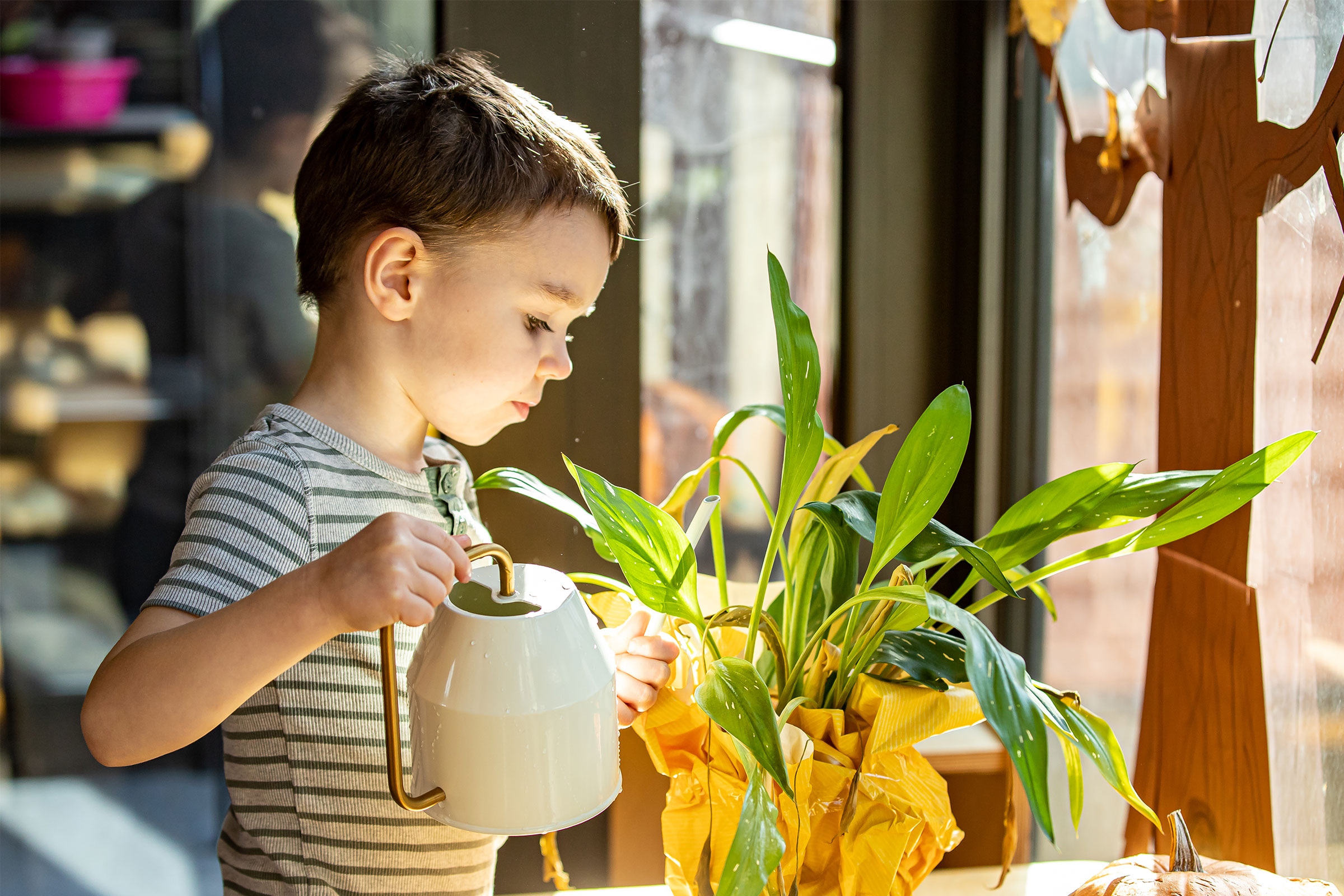
Practical Life activities, such as pouring, polishing, or table washing, are particularly effective in helping children develop self-regulation. These activities require children to balance impulse and inhibition, such as pouring water without spilling or stopping at the right moment. Montessori noted, 'Practical Life encourages repetition as well as letting children decide when they are done with the work. This is a great exercise of the will.'
Freedom Within Limits: A Balance for Self-Regulation
One of the hallmarks of Montessori education is the balance between freedom and limits. Children are given the freedom to choose their activities, but this freedom is bounded by clear expectations and respect for the community. This balance helps children learn to manage their impulses and make thoughtful decisions. Montessori explained, 'The liberty of the child should have as its limit the collective interest.'
This approach contrasts sharply with traditional education, where children are often expected to obey without question. Montessori argued that true obedience arises only after the will has been developed. She wrote, 'The power to obey is the last phase in the development of the will, which in turn has made obedience possible.' In this context, obedience is not about compliance but about the child’s ability to align their actions with a higher purpose or collective good.
The Role of the Adult: A Guide, not a Controller
In Montessori education, adults play a crucial role in supporting the child’s development of self-regulation. Rather than controlling the child, the adult acts as a guide, linking the child to the environment and observing their needs. Montessori emphasized the importance of 'faith in the child,' writing, 'We must believe that the child we want to see is there, even if they are still a work in progress.' The adult also provides freedom within limits, ensuring that children have the opportunity to make choices while maintaining a safe and respectful environment. In Montessori environments freedom is not about doing whatever one wants but about having the ability to act within a framework of responsibility.
Conclusion
Montessori education provides a powerful framework for developing self-regulation in young children. By fostering independence, encouraging purposeful activity, and providing a supportive environment, Montessori helps children build the skills they need to navigate life’s challenges. According to Montessori, 'The child who has never learned to work by themselves, to act according to their own will, cannot develop self-discipline.' In a world that increasingly values emotional intelligence and self-regulation, the Montessori approach offers timeless insights into the development of these essential skills. By nurturing the whole child, mind, body, and spirit, Montessori education lays the foundation for a lifetime of learning and growth.
Veronica Burbano, AMI 3–6 Trainer