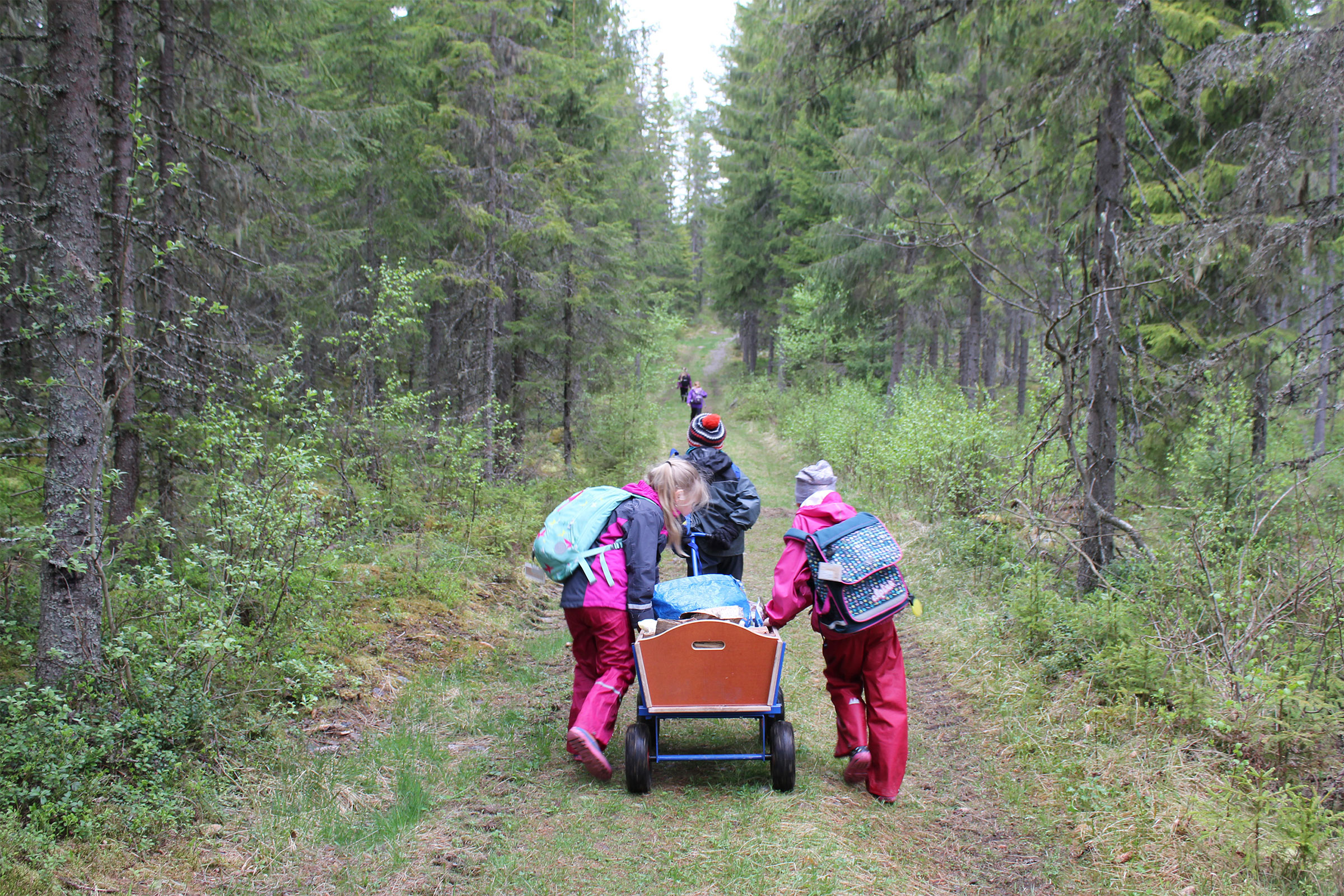
Opening the Immense Door
Dr. Montessori wrote, ‘To go out of a classroom to enter the outside world… is obviously to open an immense door to instruction.’ She also reminded us that, ‘The foot is noble. To walk is noble. Thanks to the feet, the child who already walks can expect of the outdoors certain answers to his secret questions.’ For the 6- to 12-year-old child, Going Out is not an optional extra; it is one of the ways Cosmic Education becomes real.
Cosmic Education, the Montessori approach during the elementary years, invites the child to explore their place in the universe and in human society. In early childhood, the child mostly observes community; in adolescence, the young person participates in society through work and social projects. In the elementary years, the child begins to visit society, and Going Out is the concrete bridge between observing and fully participating. Without it, Cosmic Education risks remaining an idea rather than a lived experience.
What Defines Going Out
In many schools, the term “Going Out” is used for any outing. Yet Montessori’s vision is more precise. Going Out is purposeful activity, both social and intellectual, that arises from the children’s interests and work. When they exhaust classroom resources, small groups of interested children plan to go further, perhaps to the library, to an expert, to a shop, or to a place in nature. In doing so, the 6-to-12-year-old child’s reasoning mind and imagination develop through practical life; planning, communicating, navigating public spaces, and interacting with workers of all kinds.
Why Small-Scale Going Out Matters
When we imagine only elaborate trips – a whole day in the city, or an overnight journey – Going Out can feel inaccessible. Insurance, transport, local infrastructure, or political and economic realities may make these experiences rare or impossible in some communities. Yet the elementary child still needs to exercise independence of thought and action, social collaboration, and gratitude in the wider community.
The scale of the outing can be small while the developmental impact can be large. The locations will vary, and the distances can be very short, but independence and responsibility are non-negotiable; the destination is secondary. The real goal of Going Out is not whether the group reaches a spectacular site; it is whether the children plan, act, and return with greater capacity and insight.
A first Going Out might be as simple as three children walking with a prepared adult to a nearby park to classify plants by their stems, then returning to graph their findings. Children might also plan a list and a budget and then purchase nails for a construction project or ingredients for a snack. They might interview the receptionist in the office next door about their work or observe another age group within the same campus. In each case, children prepare, carry out, and follow through on a real purpose, thinking in sequences, managing time and materials, and experiencing natural consequences in a safe framework.
As they move through their city or village, they encounter bus drivers, clerks, gardeners, receptionists, librarians, and many others whose labour sustains daily life. Meeting these human beings face-to-face supports the development of gratitude: someone cleans this park, someone stocks these shelves, someone keeps these records in order so we can find what we need. This is Cosmic Education lived in society and is only possible through functional Going Out.
Preparing the 6- to 12-Year-Old Child
Readiness for Going Out is not about reading level or academic performance, and it is not a reward for ‘good behaviour’; it is about the child’s growing capacity to use freedom responsibly over time. Teachers look for children who, within the freedom of the Montessori environment, generally follow agreed guidelines, use grace and courtesy with peers and adults, care for materials and the environment, follow through on responsibilities they have chosen or accepted, and show increasing self-control in their choice of work and use of time. Readiness includes children who need scaffolding, such as neurodivergent children or those who struggle with impulse control. Going Out is carefully adapted for individual children so that all can grow into participation in society.
Much of the preparation can happen inside the classroom: practicing phone calls and role-plays, rehearsing safe walking and queuing, taking notes while a guest speaks, writing thank-you notes, and completing work fully while leaving materials ready for others. These are the foundations of Going Out for every child, including those with higher needs, who may begin with very short, closely supported outings.
Adults can look at the work and interests of the children and ask questions that awaken curiosity about society: ‘Did you ever think about whether the bakery uses the same recipe that we use for bread?’ or ‘Where do all of the fallen leaves from this park go?’ From there, children undertake small, purposeful outings that answer their own questions, perhaps to visit the bakery or to speak with the gardener or groundskeeper.
In this sense, Going Out is an extension of the same freedom and responsibility the child practices in the classroom, not a special privilege reserved for the most compliant. A child may still make mistakes, need reminders, or require additional support and yet be ready for a carefully prepared, small‑scale outing that matches their current level of independence. When adults treat Going Out as a prize for perfect conduct, we risk turning it into an external reward instead of a natural next step in the child’s self‑construction and an essential part of fully implemented Cosmic Education.
The Adult’s Role: Security Plus Independence
For many adults, the hardest part of chaperoning is learning what not to do. Montessori wrote, ‘Every useless help is an obstacle to development.’ The job of the chaperone is to ensure safety and to support the children’s independence; everything else is secondary.
Within clear safety limits and with appropriate vetting, insurance, and local legal compliance, adults allow children to encounter manageable friction. A wrong turn that the children later correct, an office that is unexpectedly closed, a miscalculated budget that requires them to put something back – these are not failures but learning experiences. The children return a little more capable, more aware of other people’s work, and more grateful for the functioning of society.
One Integrated Journey
Going Out will look different in a dense city, a rural village, or a town without pavements or reliable public transport. When a small group of 6 to 12-year-olds carries a genuine question from their interests into the community, interacts respectfully with others, and returns changed – more responsible, more connected, more grateful – we see the elementary child beginning to find a place in human society. That is the immense door Montessori opened for them, and it is within reach, even when the first steps are very small.
Alison Awes, AMI 6–12 Trainer