Parents and educators are interested in understanding how children develop the ability to become self-disciplined. There are many aspects of this development that need to be examined.
First, we cannot expect children to develop the ability to regulate their behaviour by forcing them to be obedient. This only instils in the child the desire to push back against the forced guidelines and does not allow the child to develop the ability to control their behaviour. Montessori theory provides guidelines for developing a physical and psychological environment that fosters the skills and elements necessary for the child to develop the ability to regulate themselves.
One of those elements is the way the adult views the child and treats the child. Both of these aspects help the child understand that they can trust the adult. Trust is an essential component of human relationships. If the child senses that the adult respects them, this goes a long way toward developing trust. One of the ways we can show them respect is to be clear in our directions and consistent in our responses. This means that our directions are more understandable if they are brief and to the point. In addition, the guidelines and directions are more understandable to children if they remain consistent. There are times when it is appropriate to show some flexibility in the guidelines for children who are still developing self-discipline. For example, if a very young child is told that it is time to put on their shoes and they get their shoes but do not put them on, an adult or older child can assist them in putting them on. In the end, the child has followed the direction with some assistance. In doing this, we are not nagging the child, which is usually fruitless. It also reminds us that it is important to think before we speak, giving us time to choose our words carefully and deliver them respectfully.
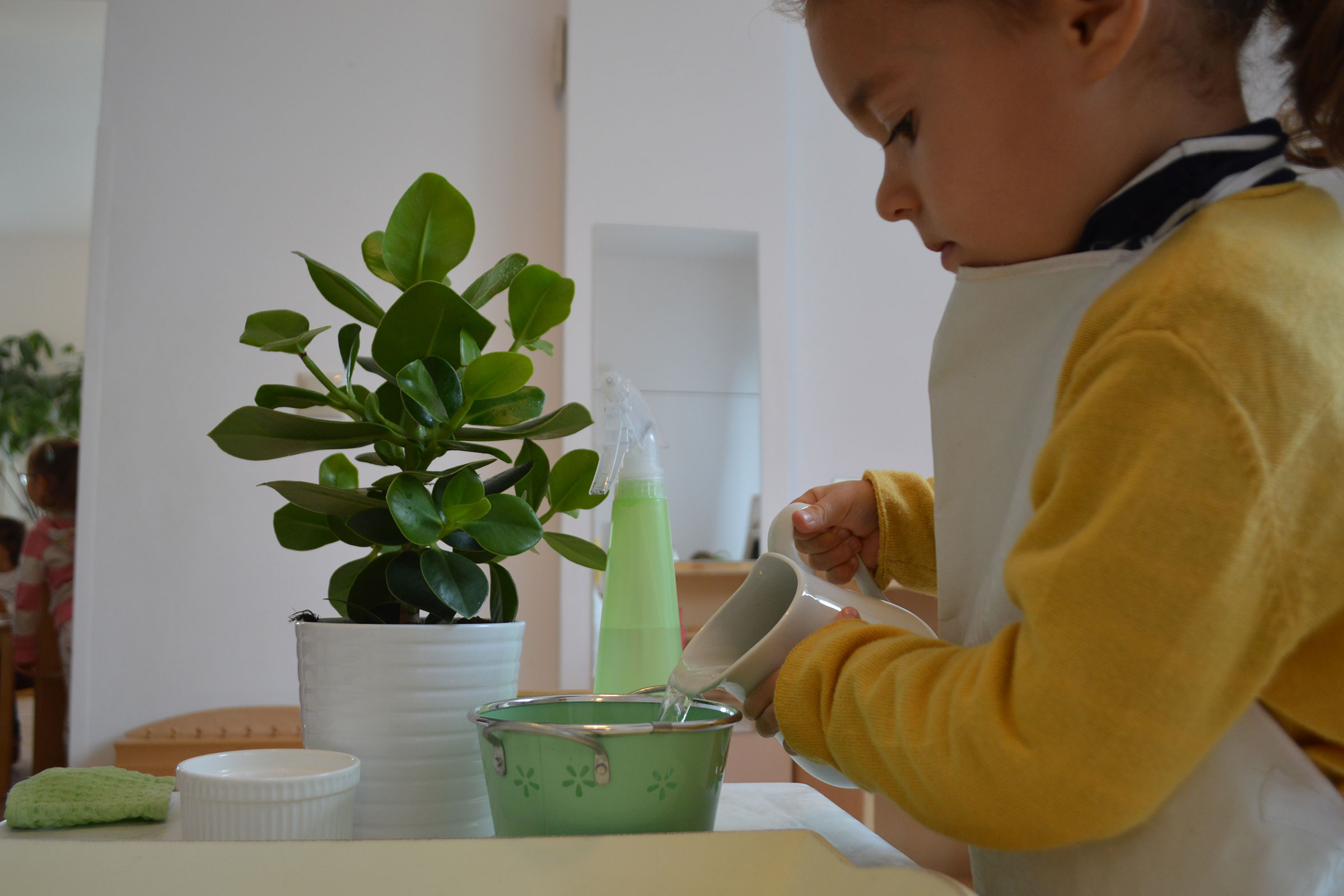
Another element that supports the development of self-discipline is an environment where the child has many opportunities for purposeful movement. Purposeful movement includes movement that makes sense to the child, such as carrying an activity to a table, sweeping up debris on the floor, watering the plants, and dusting the furniture. The development of movement gives the child many advantages, including independence and gross and fine motor control. This is why the children are allowed to choose where they want to do their activities and are not limited to one place to do things. It is also why they may continue on an activity as long as they wish, as this repetition supports learning as well as the development of the movements that the activity embraces. The theory of the development of movement in Montessori education is that the repetition leads to mastery of movement, and this mastery allows the child to control their movements including initiating movement and stopping movement. This leads to the development of the will, which allows the child to decide when to do something and when to stop. This is a key component in the development of self-discipline. When the child makes a choice of an activity, the will pushes them to begin the activity, which is initiating movement. When the child is satiated with the activity, the will pushes them to put it away, thus stopping those movements. More importantly, the will supports the child when they understand that something is not available at the moment and they need to refrain from taking it from another child. These developments are all based on the child gaining control over their movements, thus demonstrating their developed will.
Dr. Montessori observed that a child becomes able to follow commands and develop self-discipline in stages. In the first stage of obedience, the children may or may not understand the direction and may or may not be able to control the movements necessary to follow the direction. That means that sometimes the children can follow directions, and sometimes they cannot. This is confusing to adults, as for the last two days a child has followed a specific direction and today they do not, because either they do not understand it or cannot control their body sufficiently to carry it out. Most children remain in this stage until sometime after two years old.
The second stage of obedience is when the child both understands the direction and has enough control of their movements to execute the direction. This child has developed self-discipline that is welcome to both parents and educators. This second stage usually appears after three years old.
Much to Dr. Montessori’s surprise, she also observed a third stage of obedience. In this stage, the child anticipates the needs of the other children, the adults, and the environment, and fills those needs independently, without any prompting. This could be when a child sees another child struggling with hanging up their jacket and offers assistance. It also may manifest itself if the child notices someone is coughing and brings that person a glass of water. Or, while walking through the environment, the child notices that some flowers are wilted in one of the vases and the child stops to remove those flowers and replenish the water in the vase. This third stage usually appears close to five years of age.
As we observe children and their development of self-discipline, we want to take into account the role of the adult in the process. If the adult is clear, consistent, benevolent, and respectful to the children, trusting relationships will develop. If the children have the freedom to purposefully move throughout the environment, they will develop the musculature for gross and fine motor development and the opportunity to develop their wills. And finally, we have the three stages of obedience to guide us in understanding how each child’s self-discipline is developing.
Polli Soholt, AMI 3–6 Trainer