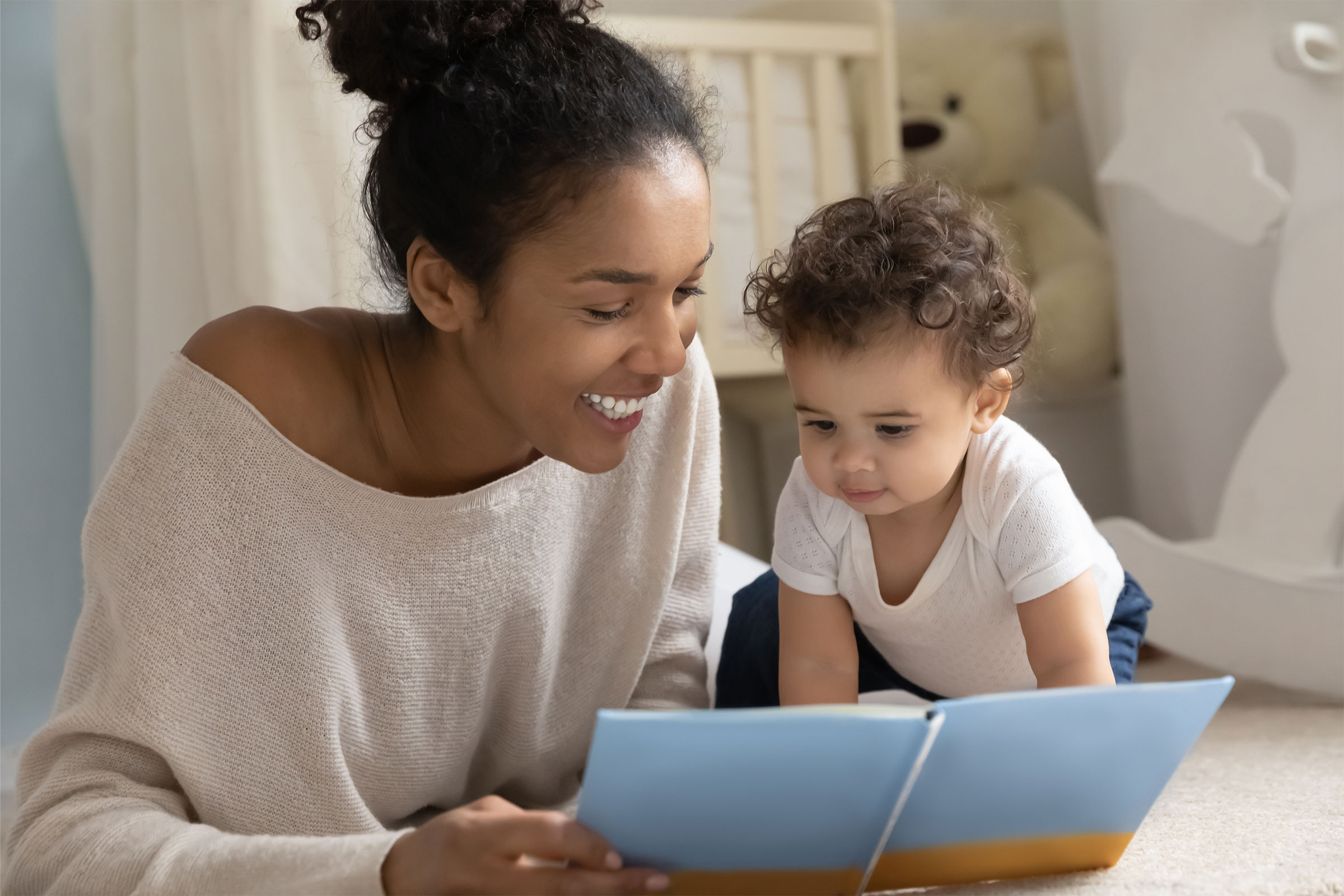
Bilingualism/multilingualism is the ability to speak more than one language. The bilingual population is believed to be larger than the monolingual population worldwide. When a child is offered the opportunity through learning a second language, it is like giving them the key to another world and broadening their horizons and opportunities. If a child lives in a bilingual environment, the periods of language absorption and acquisition will be longer. It is important to take into account linguistic coherence, as well as respect for the child's developmental milestones.
The short- and long-term benefits of bilingualism are well known. Some of the benefits:
- Cognitive development
- Longer attention spans
- Improves attention and concentration.
- Decision-making (in which language to respond, which word to use)
- It helps with sociocultural adaptation.
- It helps prevent or delay diseases such as Alzheimer's and dementia.
The absorbent mind and sensitive periods are present in the foreground of development. When the child is immersed in a bilingual/multilingual environment as part of their daily life, they have the potential to acquire and develop these languages as their first language.
We must be clear that there are slight differences between the first language, the mother tongue, the native language, and the dominant language, which seem to be the same, but each has its own characteristics.
But how do you define bilingualism, since being bilingual goes beyond speaking more than one language? In addition to learning and expressing themselves in different languages, it also carries a socio-emotional component that, in turn, helps children adapt to their time and place.
We can define bilingual individuals as:
- A person who is fluent in two languages.
- A person who expresses themselves better in one language but uses both frequently and without difficulty.
- A person who uses two languages to communicate.
Considering the power of the absorbent mind and sensitive periods, constant interaction between the child, the environment, and the adult is undoubtedly essential for the development of the bilingual child.
There are different approaches to bilingualism, the most common being OPOL (one parent, one language, the most used in our environments), MLAH (Minority Language at Home) or T&P (Time and Place). Each of these approaches has pros and cons. Even so, they all share the importance of the affective bond, the quantity and quality of language in the environment and the importance of repetition and coherence of adults.
The child should be immersed in a rich bilingual environment where adults are the main resources. It is essential that the adults in the environment each use their language in a coherent way. It must be taken into account that each child lives in a unique way. Bilingual development is affected by the sociocultural aspects in which the child develops. However, we must bear in mind that there are different types of bilingualism:
Coordinated
The acquisition of both languages in parallel. Using both languages independently. It usually develops when each adult speaks a specific language with the child.
Compound
Acquisition of two languages, but not even the child can differentiate between one language and the other.
Additive
When the environment offers the acquisition of a second language as cultural enrichment, for example, schools with bilingual programs.
Subtractive or Substitutive
The need to acquire another language in order to integrate into the new place of residence, e.g. immigrants and refugees.
Once the different types of bilingualism and the stages of bilingualism have been clarified, it is obvious that immersion environments are much more effective than bilingual programs because the child constantly hears both languages, and the ears and brain become accustomed to switching from one language to another.
Stages of bilingualism
Just as there are phases in a child's spoken language development, there are also different stages in bilingual development. Once we are clear about these phases and consider the importance of repetition, perseverance and being constant, without neglecting the importance of emotional development that is linked to the desire to communicate with others, we can witness the development of the bilingual child.
- Absorption begins to absorb the languages of the environment.
- Understanding is broader than expression.
- Code mixing begins to express itself by mixing languages and still needs to distinguish one language from the other.
- Metalinguistic awareness is when the child can differentiate between languages.
- Bilingualism is when the child understands and expresses himself easily in both languages.
It is also important to bear in mind that different areas of the brain play a fundamental role in promoting the bilingual brain process:
- Broca's area and Wernicke's area (speech production and comprehension) are constantly activated when changing languages.
- Frontal cortex, responsible for attention and working memory.
- The auditory cortex processes and interprets speech-related auditory stimuli.
- Hippocampus related to vocabulary learning and recall
- The basal ganglia also contribute to learning and memory.
How do we support the development of the bilingual child?
- Constant presence, communication and coherence on the part of the adult.
- Name each object, action, and emotion when you interact with the child.
- Remember the importance of sensory experiences related to language.
- Maintain exposure to linguistic and cultural diversity, especially at the forefront of development.
- Importance of repetition, time, and opportunities.
- Faith in the Child
- Remember that each child has his or her own rhythm and process of reception and manifestation.
- Create an environment of respect for different forms of expression.
Conclusion
We do not teach languages at the forefront of development. The child absorbs and acquires languages around him and continues to develop them. Not only do they acquire languages, but they also interact with other individuals in their lives. Thus, the development of bilingual children indirectly allows them to expand their social-emotional and cultural circle, where they often become the connector of their own cultural identity.
Gabriela Velázquez, AMI 0–3 Trainer