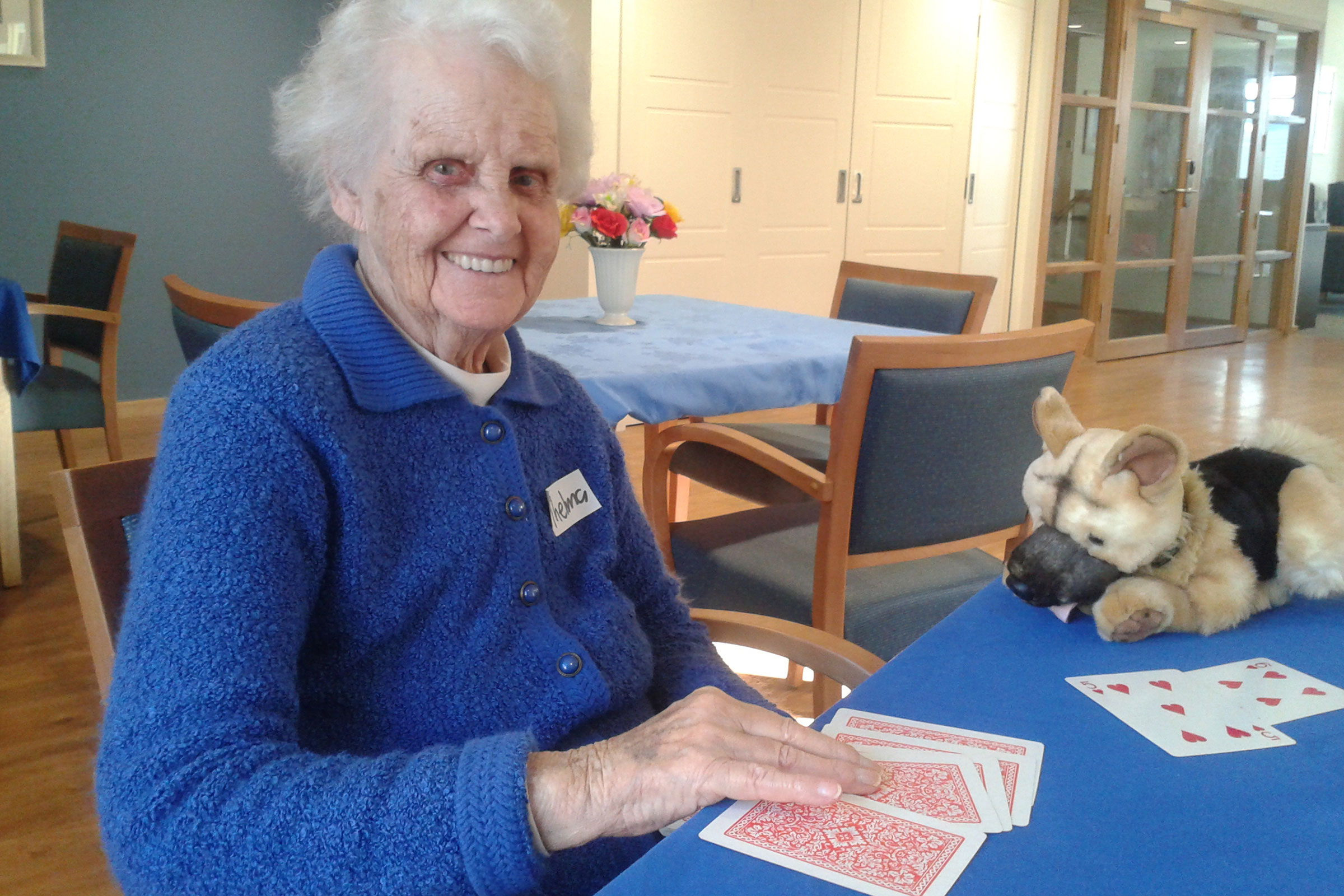
We are all ageing.
It doesn’t matter what our age, our history, or our condition is. Ageing doesn't begin in old age; it begins with life itself.
In many cultures, ageing is discussed as if it were something that happens at the end of the road. However, ageing is a process that accompanies us from the beginning of life. Each day we live is also a way of moving forward in that process.
Ageing is a profoundly individual process, but also a profoundly shared experience among all human beings.
Each person experiences it uniquely, with their own history, their own body, their own experiences, and their own lessons learned. However, none of us ages completely alone. We are nourished by the relationships we cultivate, the communities we inhabit, and the generations that walk alongside us.
For a long time, ageing was primarily associated with loss or decline. Today we know that this view is incomplete. We live in a historic moment in which humanity is learning to understand longevity in a different way.
The World Health Organization (WHO) declared the period 2021–2030 the Decade of Healthy Ageing, a global initiative that seeks to improve the lives of older people, their families, and the communities in which they live.
An Ageing World: The New Longevity
Medical, scientific, and social advances have significantly extended life expectancy. Today, many people will live several decades beyond the age of 60.
Argentine physician Diego Bernardini proposes a discussion of the new longevity and the second half of life, a stage that can extend for several decades and opens new opportunities to continue learning, participating, and contributing to society.
At the same time, the ageing population has given rise to what various studies call the Silver Economy, a concept that recognises the active role of older people in the economic, social, and cultural life of their communities.
Biology, Lifestyle, and Attitude
Ageing is a complex process involving multiple dimensions. Science recognises genetic factors that influence longevity, but we also know that lifestyle plays a fundamental role.
Physical activity, nutrition, rest, cognitive stimulation, and meaningful social relationships significantly influence quality of life throughout the years.
Alongside these factors, another less visible, yet profoundly transformative, element emerges: attitude.
The way we interpret our experiences, the meaning we give to what we live through, and the disposition with which we face change are also part of the ageing process.
As Viktor Frankl reminded us:
“When we are no longer able to change a situation, we are challenged to change ourselves.”
Maria Teresa and the Wisdom of the Everyday
I was recently thinking about Maria Teresa, a woman who is about to turn 86. Every time someone asks her how she is, she replies with a calm smile:
“I’m better than yesterday.”
María Teresa deeply enjoys the simple things in life: cooking for others, caring for her animals, observing the weather, and being attentive to the people she loves.
At 86, she hasn’t lost her curiosity. She continues to ask questions, remains interested in the world, and continues to be open to learning.
Often, the extraordinary aspects of ageing are built, almost without us realising it, in the midst of the everyday.
“The extraordinary aspects of ageing are often built from the everyday.”
— Julia Ballesteros Sentíes
A Montessori Perspective Throughout Life
Maria Montessori understood human development as a continuous process.
From this perspective, ageing does not represent the end of human development, but rather another stage on the path in which we continue learning, adapting, and finding new ways to participate in life.
Conclusion
Every moment of human life is unique. Each stage has its virtues, its challenges, its lessons, and its opportunities.
Perhaps the real challenge is not simply growing old.
Perhaps the real challenge is not missing the opportunity to live each stage with dignity.
Because ageing is not an experience that belongs only to some people.
It is a profoundly human experience.
An experience that, sooner or later, reaches us all.
“Growing old is not about moving away from life; it is another way of continuing to find it.” — Julia Ballesteros Sentíes
Julia Ballesteros Sentíes
AMI Montessori for Dementia, Disability, and Ageing (MDDA) Trainer