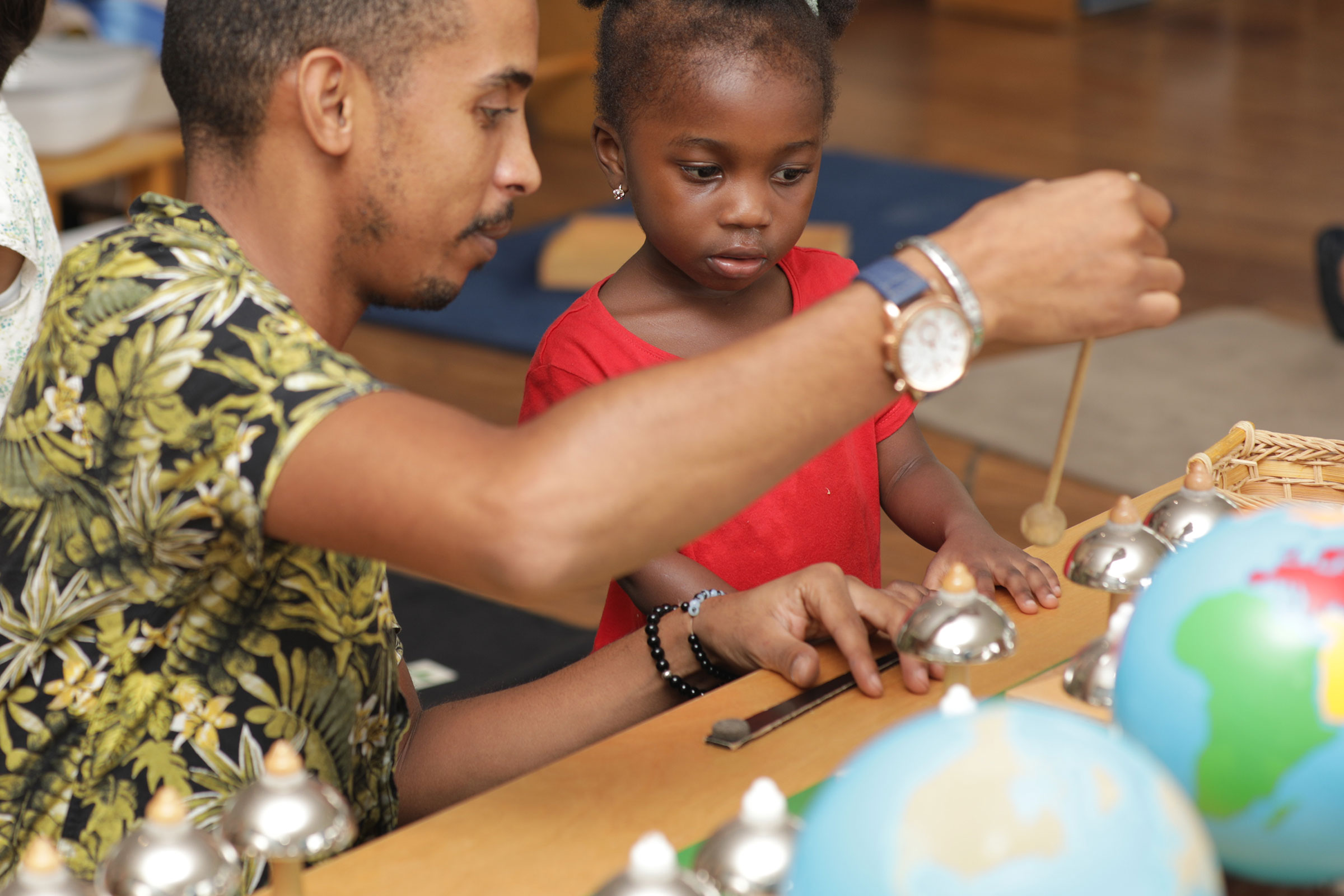
Music is a universal language that has been with us throughout history, continues to accompany us daily, and plays a fundamental role in the development of both children and adults. Its impact on the human brain and on many aspects of development is profound. Music is not only a tool for expression but also an activity that has a direct effect on the neurological system, promoting cognitive development and neuroplasticity.
The Impact of Music on Child Development
Music is considered one of the most powerful stimuli we can experience at any age, even before birth. But exposure to music during the first years of life also has profound effects on language and cognitive development. Its melodic structure, which resembles that of language, helps children learn new words and patterns. One activity that helps newborns is lullabies, traditional songs that have accompanied us throughout history. These songs can soothe babies, promote language development by creating language patterns in their native language, and strengthen bonds between adults and children, foster attachment, and promote emotional regulation.
Some authors are beginning to use the term ‘neuromusic,’ referring to the neuroscience of music, which is the discipline that studies how music affects the brain and how the brain, in turn, responds to music. Scientific studies show that music activates a complex neural network that spans several brain regions. For example, mirror neurons, located in the frontal and parietal regions, are essential for social cognition and motor learning, and are especially activated when children engage with music. The development of mirror neurons is crucial in early childhood, as they are activated through imitation and are important for the development of empathy, understanding others’ intentions, learning, and socialisation. This type of cognitive activity linked to music not only benefits musical ability itself but also has positive effects on other areas of cognitive development.
The benefits of music are not limited to the development of musical skills. Musical training improves performance in non-musical areas, such as verbal and spatial memory, mathematical skills, and language development. Practicing a musical instrument, for example, requires complex cognitive work involving attention, motor coordination, auditory perception, and memory. This multimodal experience contributes to the formation of new neural connections and the strengthening of existing ones, thus improving learning capacity and memory.
Recent studies show that people with musical training develop a larger cerebral cortex, particularly the left temporal lobe, than people without musical training.
Memory is another key aspect influenced by music. Research has shown that the formation of myelin, the substance that coats neurons and facilitates the transmission of electrical impulses, can continue beyond age 25 in people who practice music regularly. These studies show that people who have had musical training during childhood and continue practicing can extend this myelination until 28-29 years of age.
Musical practice from an early age has lasting effects on the brain. It not only facilitates the development of musical skills but also influences the brain's overall organisation. This development is reflected in a greater capacity to process information, coordinate motor activities, and improve cognitive functions.
Musical learning is also associated with improvements in short- and long-term memory, problem-solving, and concentration.
Beyond the cognitive benefits, music is a powerful tool for emotional expression. From the earliest moments of life, children can use music to communicate emotions, especially through singing and imitating sounds. Music allows children to develop their emotional intelligence, as it helps them identify and manage their feelings. Music also has the ability to reduce stress, calm anxiety, and improve mood, making it a useful tool for promoting emotional well-being.
Research suggests that listening to music we find pleasant or that makes us feel good can reduce activation of the amygdala, a part of the brain linked to the stress and fear response. Conversely, suspenseful music or music with tense harmonics can activate the amygdala, potentially leading to a more intense emotional response.
Conclusion
In conclusion, music is much more than an art form; it is a powerful tool for children's cognitive, emotional, and social development. Early exposure to music and learning a musical instrument can have a positive impact on various areas of the brain, promoting neuroplasticity, improving cognitive skills, and facilitating emotional expression. For these reasons, it is essential to encourage children's contact with music from an early age, not only as a form of entertainment but also as a means to enrich their development and well-being. Music, as an integral part of education and culture, has a transformative potential that can significantly influence people's lives.
Our purpose is not to train professional musicians, but to foster the child's holistic development, seeking activities and resources that support balanced development and provide tools for both their growth and future life.
May music be part of our daily lives.
Mónica Kleiner Deu, AMI 0–3 Trainer