Joy is a topic I reflect on often, as I believe it is an essential aspect of authentic Montessori pedagogy. When joy is present you can’t help but notice it. Joy takes on many forms; there is joy in activity, quiet joy, spontaneous joy and infectious joy! Joy is found in discovery and joy is found in community. It is exhibited by children and adults alike. Maria Montessori wrote "Joy, feeling one's own value, being appreciated and loved by others, feeling useful and capable...are all factors of enormous value to the human soul." (Montessori, 2007)
My reflections on joy were sparked by two different images. Let’s look at the first one.
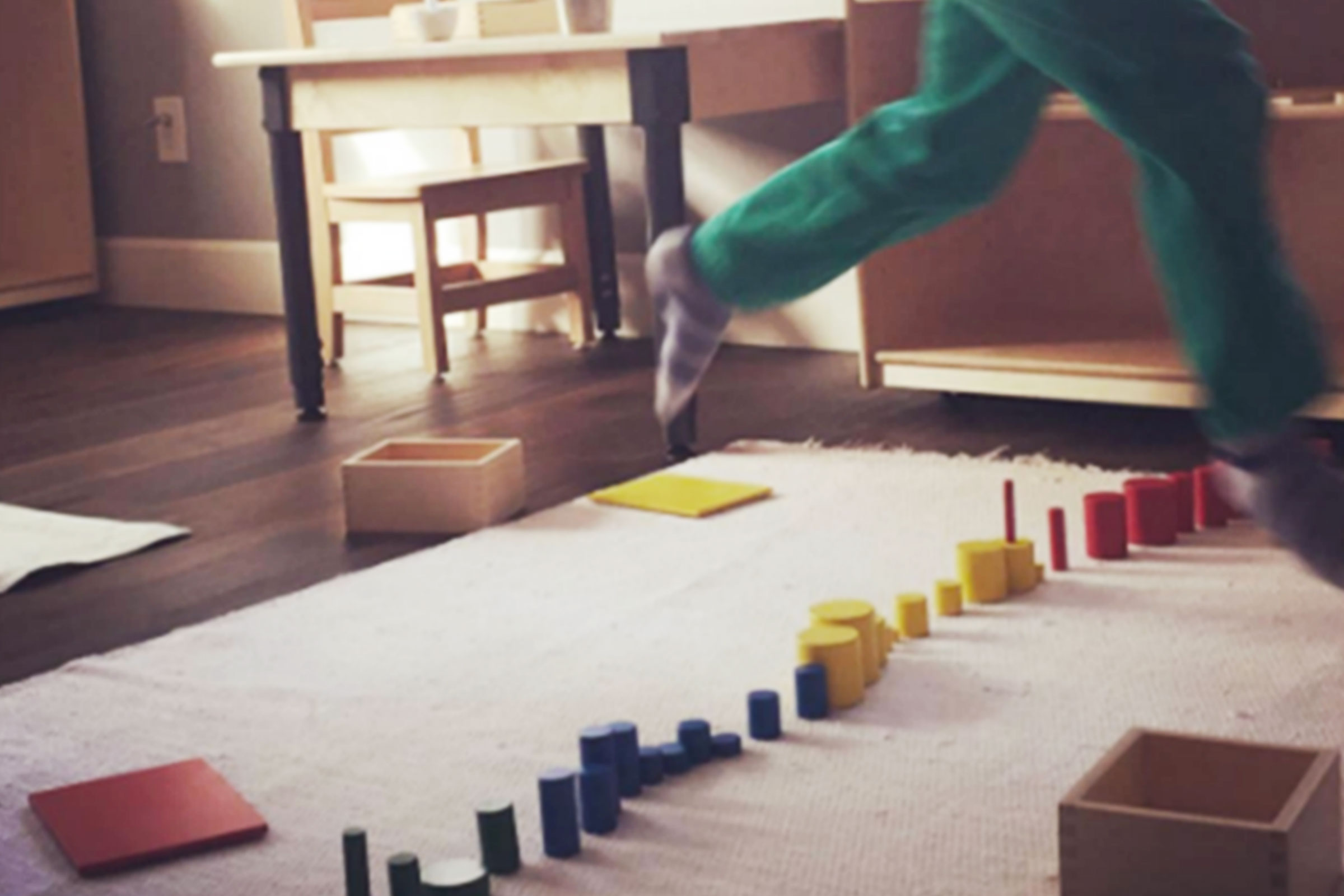
Here is a picture that captures spontaneous joy! A dancer’s leap across an expanse of the knobless cylinders, creatively arranged after hours of focused exploration. A jump for joy. Can you see it? This perspective I’m sharing is one of abundance. It is positive and full of possibility. But wait! With a shift in perspective, this image changes entirely. What is this child doing? Children are not allowed to jump over materials. Why are the boxes left open? That’s not how the child was shown to do this work! Worse yet, is this challenging work? Shouldn’t this child be doing math? This is a perspective of scarcity. It is negative and limited in possibility. A scarcity mindset is an obstacle to joy.
However, the scarcity perspective tiptoes quietly into our unconscious. It enters when we are frustrated, overwhelmed and anxious. When things don’t go as we had hoped. When our enrollments are down. When our children are not normalized. When academic goals are not met. When parents are demanding. These stresses build gradually until abundance fades and scarcity takes over. Anxiety increases as we begin to feel powerless. We begin to dread Monday, can’t wait for Friday. We lose faith. We can’t wait for school to be over and count the days left in the year.
Where is the joy?
We lose joy when we start seeing it as an outcome rather than a journey. But joy does not exist in the product, it is found in the process. Only appreciating joy as an outcome deprives us of countless moments along the way. It diminishes the importance of work in our lives. It fails to recognise the value of learning through our mistakes and challenges.
Interestingly enough, an antonym for joy is work. This is a sad commentary on our culture’s definition of work, yet Dr. Montessori tells us something different. Work is essential, work is transforming, work gives us value, work normalises and yes, work is joyful.
Let’s now look at my second image.
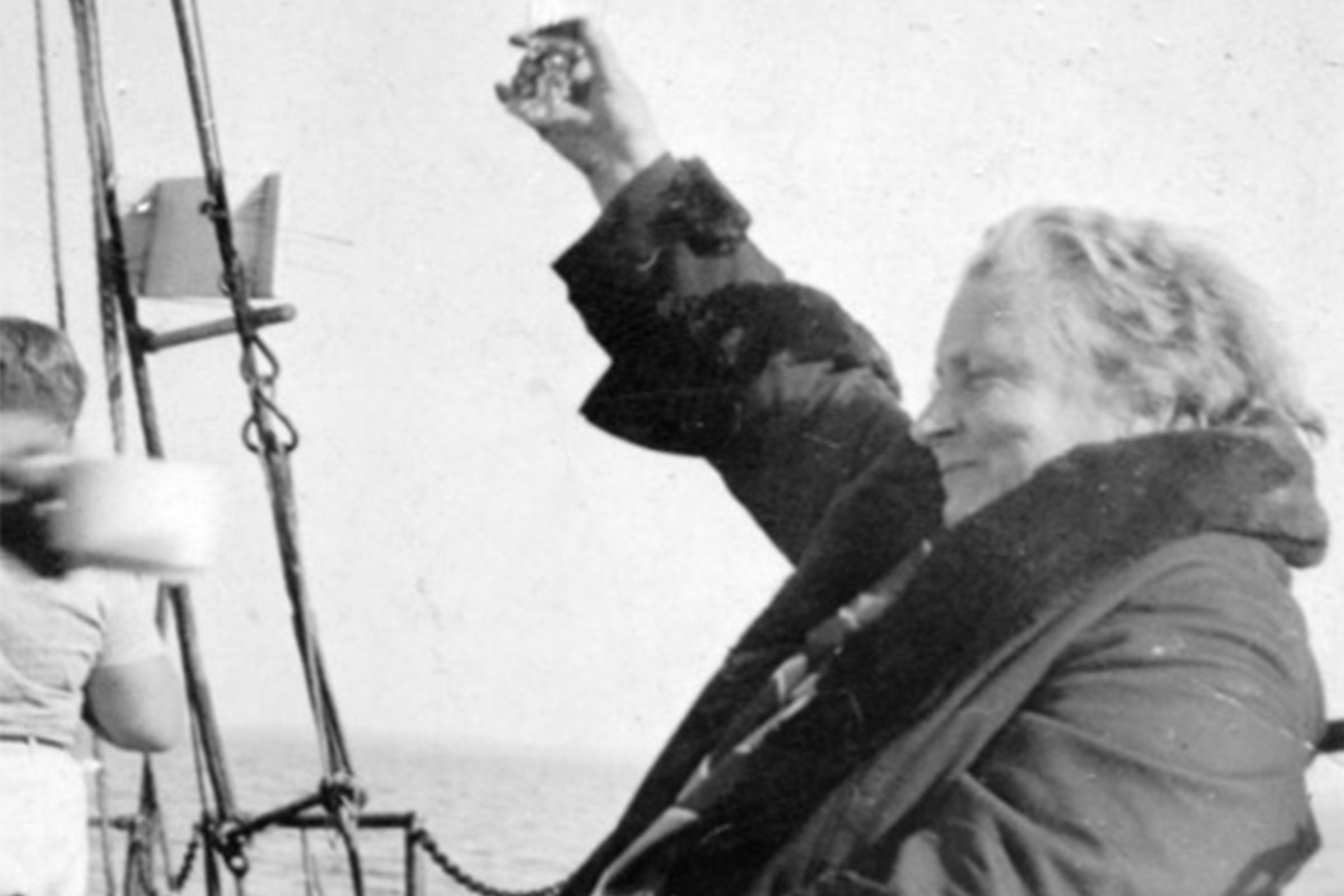
Here, joy is illustrated in this photo of Dr. Montessori taken towards the end of her career. It is impossible not to see the joy radiating in her face. I immediately fell in love with this photo as it was a stark contrast to the many formal, serious photos taken of her throughout her career…an incredible career of discovery that was much more about the process than the product. I can only conjecture that the joy radiating from her face springs from a well of personal fulfilment, from a life well lived in service to others. It springs from a place of abundance.
For in a world of abundance, there is room for everyone to grow. We don’t have to compare ourselves to others. When we embrace the process, our work becomes focused on contribution. We become empowered, engaged, and inspired. When we are inspired, we in turn inspire others. In serving others, we begin to experience a connection to something bigger and in doing so, we are transformed. Mahatma Gandhi said: "The best way to find yourself, is to lose yourself in the service of others.”
The following passage was written by Steve Cochrane, the former award-winning Superintendent of the Princeton public school system and current Executive Director at the Institute for Humane Education.
"Imagine if learning were a journey of discovery in which students were invited to explore their deepest questions and concerns about the world, given opportunities to uncover their talents and passions, and then helped to acquire the new knowledge and skills they needed to achieve their goals, while simultaneously making the world a better place. Imagine if the mission of every school was to prepare all students to lead lives of joy and purpose as knowledgeable, creative, and compassionate citizens of a global society. Learning would flourish; so too, might our world." (Cochrane, 2023)
His words align perfectly with Dr. Montessori’s vision for education. To honor Montessori’s legacy, we need to embrace her attitude of abundance. Yet to spark joy in our environments, we must first look to ourselves. We must focus on the positive. What are you good at? Where can you draw inspiration? Don’t compare yourself to others and gravitate towards things that you instinctively enjoy doing. If you focus on that, joy will become by product of your process. And remember, don’t take yourself too seriously. Reconnect to the joy that brought you into this work and allow it to guide you. Who knows where it will lead you?
Gretchen Hall, AMI 3–6 Trainer