Abstract
This article reconsiders the idea of “classroom management” in Montessori settings for children from birth to three, proposing a shift from control toward the intentional preparation of the adult, the environment, and the daily rhythm of life. Grounded in Dr. Montessori’s understanding of development, it explores how inner order, emotional security, and growing independence emerge when the prepared environment supports children’s developmental needs through relationship, consistency, and trust.
----------------
When we hear the phrase “classroom management,” it often creates tension. The term suggests control—something that needs to be fixed, directed, or contained. In Montessori, especially from birth to three, this language does not reflect how order truly develops.
Dr. Maria Montessori offered a different understanding: when an adult takes power over a child or a system, development is interrupted. Instead of managing behaviour, the Montessori guide prepares the prepared environment so that order can emerge naturally—until, over time, the environment begins to manage itself.
What happens when control is replaced by trust?
What becomes possible when the adult steps back and the prepared environment steps forward?
During the first three years of life, these questions have real and immediate impact—they actively influence the emotional and social growth that forms the foundation of a child’s self-construction.
The adult’s inner state: the first prepared environment
Before a child ever touches a material, they respond to the adult. Tone, pace, posture, and emotional presence are absorbed immediately. Montessori wrote that the adult must find within herself “the calm and patience necessary for the unfolding of life” (Montessori, 1949). The adult’s inner state becomes the atmosphere of the prepared environment.
A reactive adult often generates a reactive environment.
A grounded adult generates stability.
This reframes “management” as self-preparation. One breath before entering the environment, one pause before responding, one decision to observe rather than correct—these small acts form the invisible foundation of peace. The adult’s presence is not a strategy. It is pedagogy.
The prepared environment as the silent guide
Montessori environments are intentionally designed so children know what to do without constant adult prompting. Order, simplicity, and accessibility guide the child toward purposeful activity. When the prepared environment is clear, children move with confidence; when it is chaotic, they rely more heavily on adult intervention. Every detail communicates a message: “You belong here.”
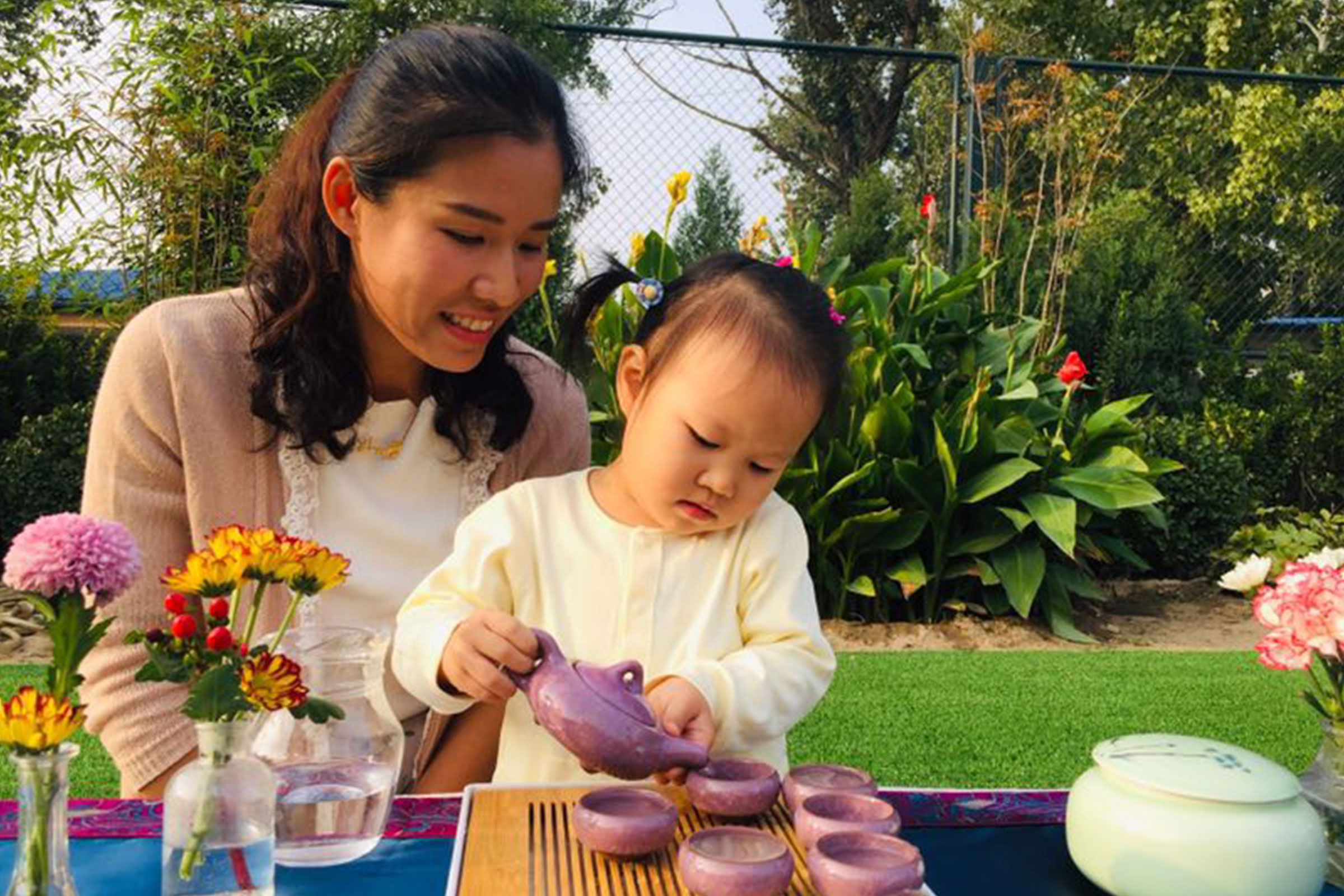
Everyday activities—washing a table, greetings, caring for the environment—support concentration not because adults remind children, but because children internalise predictable sequences. Over time, the environment itself becomes instructional.
As Montessori reminds us, “the greatest sign of success for a teacher is to be able to say, ‘The children are now working as if I did not exist’” (Montessori, 1949). A prepared environment that manages itself does not erase the adult; it reveals the depth of the adult’s preparation.
Connection over control
The adult’s ego often gravitates toward control. It wants to fix, redirect, or step in quickly—sometimes out of care, sometimes out of anxiety. Yet when the adult becomes the centre of the prepared environment, the child’s independence weakens. Montessori practice invites us to pause and ask:
What might this behaviour be communicating?
What in the prepared environment may be contributing?
Is this a moment to act—or a moment to wait?
Connection, not correction, lies at the heart of Montessori guidance
In the first three years, co-regulation is essential. A child cannot regulate when the adult cannot. When we model calm, we invite calm. When we model respect, we invite cooperation. When we trust development, children reveal capacities that control can never produce.
Routine: the architecture of peace
In Montessori, routine is not rigid scheduling; it is rhythm. Rhythm communicates safety. For very young children, predictability is emotional security. When children know what comes next, their energy is freed for exploration rather than vigilance.
Greetings, eating all together, meaningful community work, and Grace and Courtesy woven throughout the day create a prepared environment that feels coherent and trustworthy.
Consistency is not control—it is care
Restoring peace
No prepared environment is free of conflict. Montessori does not aim to eliminate challenges, but to meet them with awareness and trust in development.
Before responding, the adult regulates themselves. A dysregulated adult cannot guide a dysregulated child. Observation precedes action. Peace is restored through understanding rather than authority.
Dr. Montessori wrote that “peace is what every human being is craving for, and it can be brought about by humanity through the child” (Montessori, 1948). When we protect the child’s dignity in moments of difficulty, we are not only restoring order—we are cultivating peace.
A prepared environment that manages itself
A prepared environment that manages itself is not one without conflict. It is one where conflict becomes a learning opportunity, an opportunity to practice grace and presence. It is a place where the adult models calm, the environment offers clarity, routine provides predictability, and children internalise order through meaningful work.
We are not managing; we are accompanying.
We are not directing; we are preparing.
We are not controlling; we are trusting development.
For adults working with young children, this shift can feel subtle but profound. It asks us to slow down, to notice our own internal rhythms, and to trust that development unfolds through relationship and repetition rather than urgency. When adults commit to this inner work, the prepared environment becomes coherent, and children experience it as a place of safety, meaning, and belonging.
Conclusion
A prepared environment that manages itself is created not through control, but through trust, clarity, and consistent preparation. When the adult’s presence is grounded, the environment is intentional, and the rhythm is predictable, children develop the inner order that guides their own behaviour.
Dr. Montessori’s vision reminds us that peace is not imposed—it is cultivated. When we prepare ourselves and the environment with care, the prepared environment becomes a living expression of peace, where children grow not because we manage them, but because we believe in their natural capacity to flourish.
Gabriela Velázquez S., AMI 0–3 Trainer