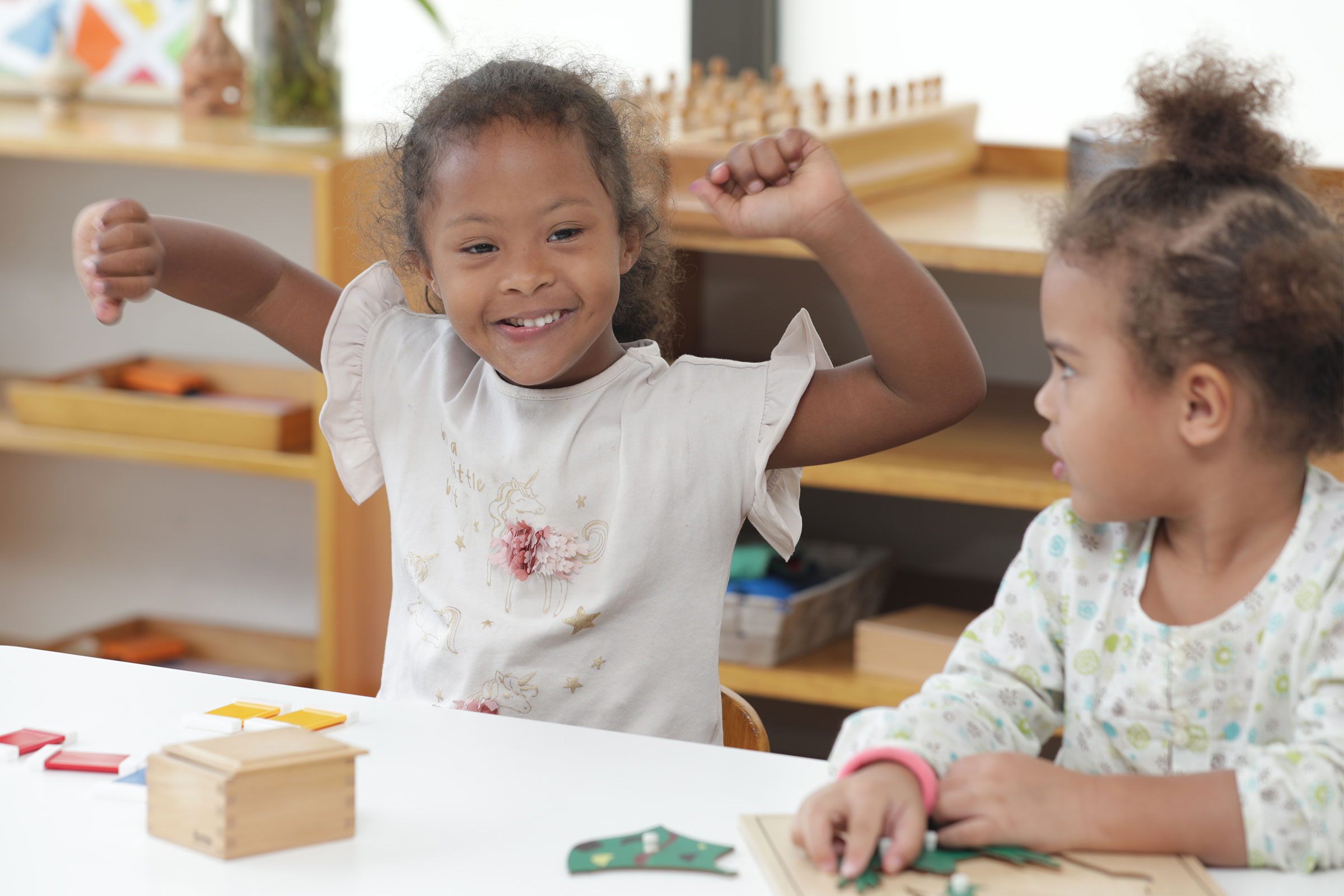
Some of the things provided in the Montessori environment that support children in the development of their self-confidence and self-discipline include the following:
Freedoms - When the children join the Children’s House, they are offered limited freedoms. The more the children show their ability to handle the limited freedoms offered to them, the more those limits are loosened. The freedoms offered include the freedom to choose, the freedom to speak, the freedom to move, the freedom to be, to mention a few. When offered with limits, these freedoms help the child learn how to regulate their behaviour and speech such that they keep themselves safe, interact positively with other users of the environment and ensure that the contents of the environment remain safe and are used as they are meant to.
These freedoms lead the child to develop certain skills, abstract concepts and increases their confidence in themselves. These children, with the gifts of their sensitive periods, human tendencies and deep desire to explore sensorially, can build their personalities, build their resilience and character. Montessori says, “The difference is solely that in this freedom children work happily, and acquire culture through their own activity, that discipline originates from within the child himself.”
Friendliness with Errors – In the Montessori environment, the child is helped to become friendly with errors from very early on. In the sensorial area, some materials have what is known as the control of error. This is when a child can sense that an activity, he is working with has not been completed as it should be. The mechanics for the child knowing this could be in-built in the material or in the child’s own perception or even the adult’s re-presentation. His tendencies for repetition, work, independence and perfection kick in and he will try to complete the activity as best as he can.
Having these possibilities available in the Children’s House means that the child develops into an independent, resilient and confident problem solver. “For this teacher we have substituted the didactic material, which contains within itself the control of errors, and which makes auto-education possible to each child.”
Adult’s attitude – Montessori teachers are trained to look for the positives in what the children are showing. They are trained to not jump to the aid of a child at the first showing of a challenge the child encounters. This is, however, nullified by the need to stop the child from hurting himself or others. We are trained to ensure that our entire environment supports and encourages the child to function independently within it. This is apparent right from the child-sized furniture and materials to the way we interact with the children. We speak respectfully and sincerely to them. Treating them this way develops their confidence and belief in who they are and the value they bring.
Grace and Courtesy Activities – In the Montessori Children’s House, the children are offered group activities which help them know how to interact respectfully and with grace with the people and objects in the environment and outside it. These group activities could be those that show the children how certain movements can be carried out without causing any harm to themselves or other users of the environment, such as carrying a chair. They could be activities that provide the child with respectful language to use when interacting with other users of the environment, for example, how to ask for something from someone else. Since they are in the safe environment of the Children’s House, they can practice these behaviours. They end up being socially adept when dealing with other children or adults.
Group Activities – Group ac tivities are possible in any of the areas of learning offered in the Montessori environment. Through these, children learn the importance of order and respect for each other. They also learn the value of turn-taking and decide among themselves who will act the place of the adult.
To end this article, I will tell a story of a child I had the fortune to work with from her time in the Children’s House and am still in touch with now she is in her 20s. This child was about 3 years when I met her in the first Children’s House I worked. She was a curious and hard-working child who enjoyed being presented to and was one that enjoyed the benefits mentioned above of a Montessori Children’s House. She was friendly and confident to chat with adults and other children in the environment. Being in a functioning Children’s House and having invested parents helped. What we were doing in the Children’s House was being continued at home.
She continued her learning in the Montessori elementary class. Being 6-12 trained, I had the opportunity to work with this young girl when she was in upper elementary. The young girl had grown into a respectful, confident, helpful and happy pre-teen. She enjoyed working in groups with her peers. The children all cooperated with each other to maintain the environment and expand their learning. These days, she works in a Montessori Infant Community and is training to be an Assistant to Infancy guide.
I have included information about this young lady because I can see the difference in her character and mine at her age. She is confident, respectful and happily following her dream. The job she is involved in is not for the faint-hearted but for the hard-working.
Children who have experienced the freedoms offered in a functioning Montessori environment develop a friendliness with errors. The adults treated them in such a positive way that they have ended up confident and able to interact with people of different ages. The Grace and Courtesy activities and group activities gave them the tools to be able to interact with people and spaces right from an early age. The Montessori method has indeed been bearing fruit for decades, producing children who are, indeed, self-disciplined and self-confident.
Bimpe Pogoson, AMI 3–6 Trainer