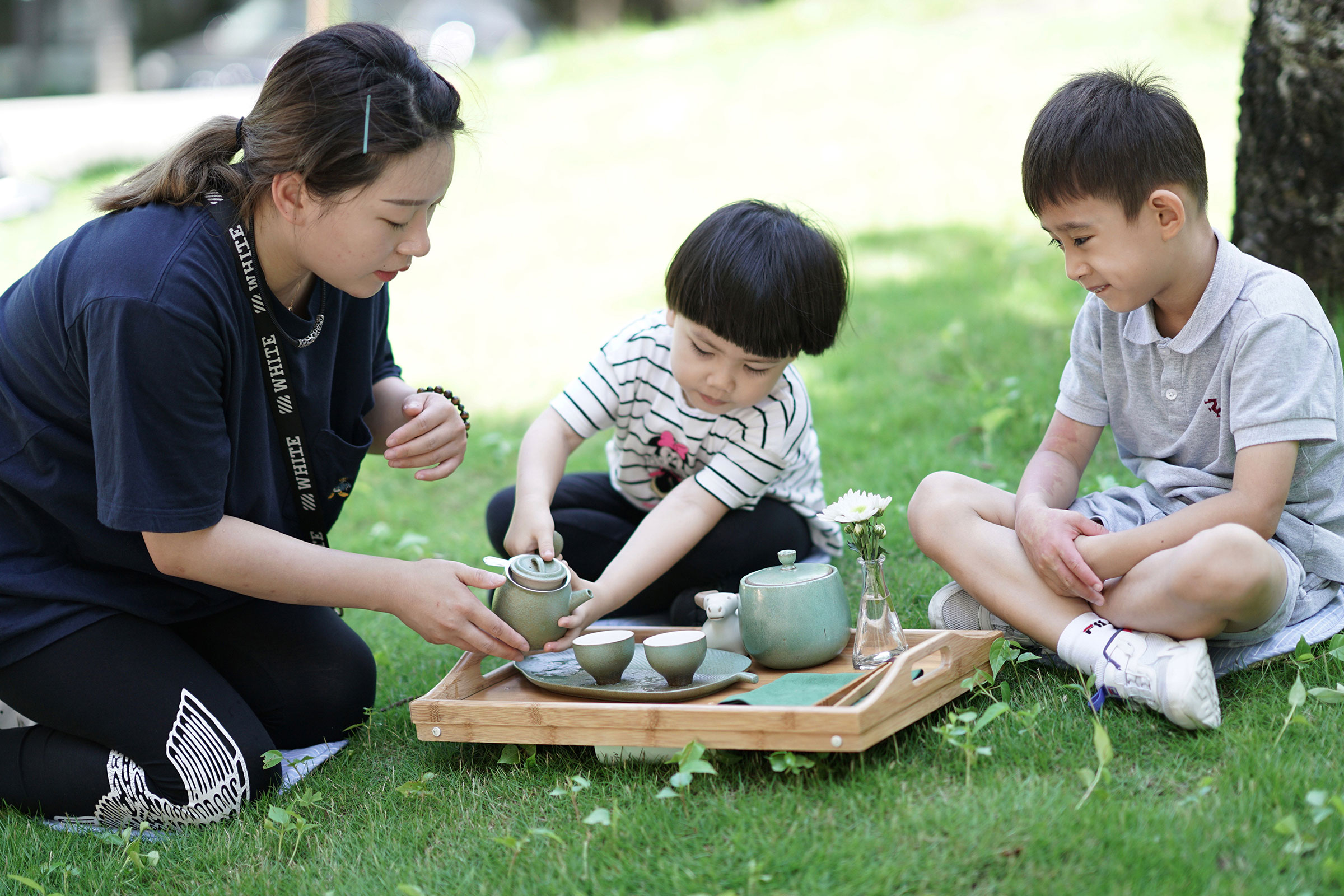
The philosopher and founder of Taoism, Laozi, proposed the concept of "teaching without words" (bu yan zhi jiao) during the late Spring and Autumn Period (approximately 2,300 years ago)—a pedagogical wisdom that transcends verbal instruction and honours natural disposition. In the Tao Te Ching, Laozi advocates that "the sage manages affairs without action and practices teaching without words," emphasising that educators should, like gardeners, provide nourishment without forcing growth, subtly guiding development through their own conduct and environmental cultivation. This philosophy resonates profoundly with Montessori education's principles of "following the child" and "preparing the environment," and its modern practice can be crystallised as constructing a unified environment of "physical as body, spiritual as breath, cultural as soul."
Physical as Body: Environment as the Skeleton of Education
The physical environment serves as the foundational vehicle for education. Classrooms require clearly defined functional areas with materials arranged in a logical sequence, endowing the space with order and predictability that supports children in establishing a sense of security and structure. Real tools sized appropriately for children enable autonomous operation, while the natural consequences of tool use provide organic feedback for children to adjust their behaviour, facilitating entry into deep learning states.
Spiritual as Breath: Atmosphere as the Breathing of Education
The spiritual environment constitutes the emotional and relational tone within the space. Stable daily rhythms and advance notice of special activities respect children's sensitivity to order, providing psychological safety. Within the boundaries of "respecting others and the environment," children enjoy the freedom to choose their work and explore independently, thereby igniting intrinsic learning motivation. Mixed-age groupings create a microcosm of society where older children naturally develop leadership through guiding others, while younger children grow through observation and imitation. Adults assume the role of "humble observers," supporting children with minimal necessary intervention and accepting imperfection with tolerance, nurturing a growth mindset.
Cultural as Soul: Heritage as the Spirit of Education
The cultural environment shapes children's identity and sense of belonging. Cultural elements should be organically integrated into daily life—incorporating both local and multicultural content—allowing children to understand traditional heritage and human commonality through hands-on engagement. Art areas can provide traditional materials such as ink wash painting and paper cutting, enabling children to internalise cultural wisdom as part of their own spirit through the work of the absorbent mind.
An environment unified in these three dimensions becomes itself a "silent teacher": the physical body guides behaviour, the spiritual breath nourishes the soul, and the cultural spirit shapes identity. Without excessive words, it permeates children's lives with order, respect, and beauty, ultimately pointing toward the realm described by Laozi: "the Master acts without doing anything and teaches without saying anything. Things arise and she lets them come; things disappear and she lets them go. She has but doesn't possess, acts but doesn't expect. When her work is done, she forgets it. That is why it lasts forever."—making education a natural unfolding, allowing children to grow through autonomous exploration into independent, wise, and compassionate individuals.
Jing Zhang, AMI 3–6 Trainer