Educació i Història: Revista d’Història de l’Educació Núm. 40 (juliol-desembre, 2022), pàg. 161-182 Societat d’Història de l’Educació dels Països de Llengua Catalana. DOI: 10.2436/20.3009.01.288
Educació i Història: Revista d’Història de l’Educació Núm. 40 (juliol-desembre, 2022), pàg. 201-225 Societat d’Història de l’Educació dels Països de Llengua Catalana. DOI: 10.2436/20.3009.01.290
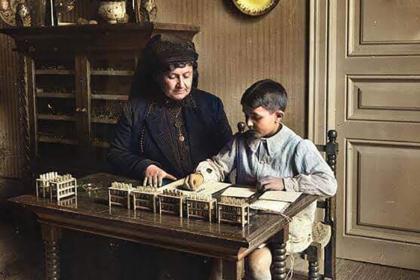
Today I will introduce two articles—one by Daniel Cañigueral Viñals and one by Elisavet Chorianopoulou—both published in the special issue on The Internationalization of Montessori Pedagogy in Educació i Història: Revista d’Història de l’Educació. Each examines the diffusion of the Montessori method in Southern Europe, with Cañigueral Viñals focusing on Spain and Chorianopoulou on Greece. Cañigueral Viñals demonstrates that Maria Montessori’s arrival in Barcelona in 1915–1916 marked a pivotal moment in Catalonia’s early twentieth-century educational renewal. Invited by the Mancomunitat to deliver an International Course in 1916 and to help establish a model school, Montessori was viewed as offering a framework for pedagogical and social modernization. Newly uncovered archival materials illuminate the extent to which Catalan reformers mobilized to introduce her ideas, incorporate them into institutional structures, and position the method within broader modernisation projects.
Chorianopoulou, by contrast, examines the work of Maria Edelstain-Goudeli, the pioneering educator who introduced Montessori education to Greece in the 1930s. With a multicultural background and training across multiple disciplines, Edelstain-Goudeli studied directly with Maria Montessori in Barcelona in 1933 before attempting to apply the method within Greece’s highly centralised and conservative educational system. Her efforts laid the groundwork for the establishment of Montessori pedagogy in the country, despite significant political, cultural, and institutional barriers. Together, these articles illustrate how the Montessori method circulated within so-called “scientifically peripheral” contexts and highlight the decisive role of individual educators, reformers, and administrators in adapting, promoting, and institutionalising the approach in regions where it had no prior foothold.
Dr Erica Moretti, Global Research Group

Other Articles
We welcome the active participation of the global Montessori community in recommending research for inclusion on these pages. Please reach out to the Global Research Group at [email protected] with any suggestions as well as comments on how this resource can be further expanded or improved.