Recalibrating Montessori: Reflections on Meeting Children in the Margins: A Grounded Theory Study of Montessori Education’s Global Reach
The reflection presented here on the article ‘Meeting Children in the Margins: A Grounded Theory Study of Montessori Education’s Global Reach’ by Victoria J. Johnson, Rochelle L. Dalla, and Wayne A. Babchuk is not intended as a conventional academic review. Rather than offering a detailed, point-by-point account of every argument and empirical step, I concentrate on those dimensions of the text that I find especially significant, innovative, and intellectually generative. After all, one of the central purposes of scholarly inquiry is not only to report findings, but to open new and compelling avenues of thought.
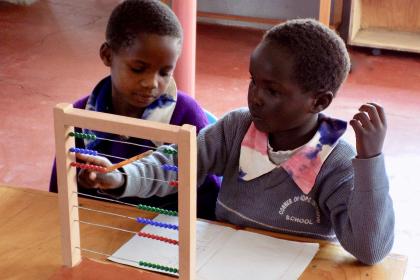
One of the first issues that captured my attention concerns the condition of childhood in the margins—a formulation carefully employed by the authors. This expression is not merely semantic. It avoids positioning children as external to society and instead acknowledges their lived realities within structurally marginalized contexts. These are children whose everyday experiences differ profoundly from the idyllic image of childhood in affluent, peaceful countries with stable schooling systems and supportive families.
Johnson, Dalla, and Babchuk situate this problem within a framework deeply resonant with Maria Montessori’s pedagogical vision: care for the vulnerable, education in times of crisis, and the role of schooling in fostering global peace. Their intervention is particularly important given that contemporary Montessori education is often associated with relatively privileged environments in the Global North. Although there are documented initiatives in less advantaged regions, global distributions of Montessori institutions still indicate a concentration in more affluent contexts. Against this background, the authors’ decision to examine Montessori initiatives among children in the margins is both courageous and timely.
When this thematic boldness is combined with theoretical depth and methodological rigor, the outcome is a study that deserves close attention—not only from scholars of Montessori education, but from anyone concerned with the broader future of schooling.
In the initial sections of the article, the authors present data illustrating the vast number of children living in marginalized circumstances worldwide. They also engage in a careful conceptual clarification of education as a human right. Importantly, they remind readers that discussions frequently emphasize the right to education, while insufficient consideration is given to rights in education and rights through education. This tripartite distinction is not merely terminological; it shifts the focus from access alone to the qualitative, relational, and emancipatory dimensions of learning.
The authors then mobilize the 4A framework—availability, accessibility, acceptability, and adaptability—drawing on UNESCO documents and related legal instruments. Accessibility is interpreted not simply as physical access to schooling, but as the genuine possibility of full participation in educational opportunities. Acceptability, in turn, concerns the quality and integrity of learning processes: education that supports creative and emotional growth, encourages responsible citizenship, strengthens social bonds, and enables individuals to pursue meaningful aspirations.
Adaptability, the fourth “A,” emerges as especially decisive. It points to the necessity of adjusting educational approaches—including Montessori pedagogy—to local cultural, social, and economic conditions. Johnson, Dalla, and Babchuk convincingly argue that Montessori education holds substantial adaptive potential, provided that practitioners allow interpretative flexibility while remaining anchored in its core principles.
In other words, only a form of Montessori pedagogy that is genuinely responsive to specific children and particular environments can offer a meaningful response to the challenges faced by those who are less privileged than the affluent West or North. This conclusion carries profound implications for how authenticity is conceptualised within the Montessori community.
Throughout the article, one senses—though it is not always articulated explicitly—that the recognition of diversity in practice, and more broadly the celebration of difference, may itself be part of the solution for supporting children in the margins. The acceptance that Montessori can be expressed in multiple articulations stands in tension with contemporary discourses that seek to define a single, standardized model of “authentic” Montessori.
Here, the authors provide empirical grounding for what might be termed interpretative pluralism. Their findings suggest that plurality in practice does not necessarily signal dilution; rather, it may constitute a condition for genuine inclusion. A truly inclusive Montessori pedagogy—capable of addressing the realities of children in the margins—appears to depend precisely on the coexistence of diverse implementations. This insight resonates strongly with Montessori’s own writings, in which she repeatedly demonstrated openness to contextual variation grounded in careful observation.
The methodological choice of a qualitative, constructivist grounded theory approach is equally noteworthy. In an era marked by the renewed dominance of quantitative paradigms in educational research, the authors’ commitment to in-depth qualitative inquiry stands out. They guide the reader meticulously through successive stages of data collection and analysis, offering knowledge that is both methodologically robust and attentive to practitioners’ voices.
This methodological orientation foregrounds what may be described as an epistemology of practice. Knowledge about Montessori education is not derived solely from abstract theoretical prescriptions, but from lived engagement, reflective adjustment, and situated action. Such an epistemological stance aligns closely with Maria Montessori’s own scientific pedagogy, grounded in systematic observation and the dynamic interplay between theory and practice. In this sense, the study does not merely analyze Montessori settings; it enacts a mode of inquiry that echoes Montessori’s original methodological commitments.
A particularly stimulating distinction introduced in the article concerns conventional and nonconventional Montessori settings. By employing this terminology, the authors implicitly reveal that Montessori itself functions as a recognizable convention—a structured configuration of environment, materials, and pedagogical principles. This convention provides coherence and identity; yet it may also risk rigidity.
The findings suggest that Montessori education often responds most effectively to the needs of children in the margins precisely within contexts that might be labelled nonconventional. These contexts are further illuminated through the concept of “individual paradigms of Montessori,” reconstructed carefully by the authors. Such paradigms reflect the ways in which practitioners interpret, internalize, and recalibrate Montessori principles within their specific realities.
At this juncture, a fundamental question emerges: What qualifies a given initiative as Montessori? The examples presented by Johnson, Dalla, and Babchuk indicate that no single criterion suffices, as it may involve fidelity to Montessori’s foundational texts, to the prepared environment, and to characteristic materials and techniques.
Yet the process of recalibration—introduced by the authors to describe iterative adjustments informed by empirical experience—invites a more dynamic understanding.
Recalibration can be read not only as a pragmatic adjustment but as a conceptual category illuminating the evolving character of Montessori pedagogy. Instead of aspiring to rigid adherence to a singular model, or locating legitimacy exclusively in accreditation mechanisms, we might recognize that educational practice reshapes theory. Continuous observation of children’s needs across diverse contexts does not merely apply Montessori principles; it refines and expands them.
This perspective leads inevitably to the theme of autonomy, which the authors identify as the most frequently coded analytical category in their study. Autonomy appears not only as a developmental goal for children, but as a structuring principle of the educational environment. Yet one might extend this insight further.
If supporting children’s autonomy serves as a guiding orientation for practitioners worldwide, should autonomy not also inform relationships among adult Montessorian educators?
Here, interpretative pluralism and autonomy converge. A community that genuinely values children’s self-determination might also cultivate space for diverse adult interpretations, resisting the temptation toward doctrinal uniformity.
Such an approach would reflect an ethics of professional freedom consistent with Montessori’s original emphasis on the prepared adult—an adult capable of reflection, humility, and adaptive judgment.
In this sense, the article by Johnson, Dalla, and Babchuk provides empirical support for a vision of Montessori education as both principled and open, coherent yet adaptable. It demonstrates that plurality in implementation does not undermine integrity; rather, it may constitute the very condition for responding responsibly to children in the margins.
I strongly recommend this text. Its findings illuminate the remarkable adaptive capacity of Montessori pedagogy and invite renewed reflection on autonomy, interpretative diversity, and the epistemology of practice. In doing so, the study not only contributes to Montessori scholarship but also offers a compelling perspective on the future of education in a deeply unequal world.
Jarosław Jendza
University of Gdańsk, Poland
Montessori Europe

Other Articles
We welcome the active participation of the global Montessori community in recommending research for inclusion on these pages. Please reach out to the Global Research Group at [email protected] with any suggestions as well as comments on how this resource can be further expanded or improved.