Debs M. Montessori in India: Adapted, Competing, and Contested Framings, 1915–2021. History of Education Quarterly. 2022;62(4):387-417. doi:10.1017/heq.2022.25
Montessori in India: Adapted, Competing, and Contested Framings, 1915–2021
In this article, Debs explores how Montessori education in India has expanded and contracted over time. She identifies four main paths, or frames, through which the approach has developed:
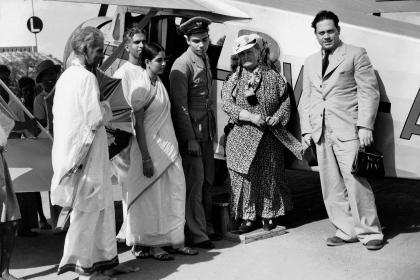
- From the opening of the first Montessori school in India in 1915 to the death of Montessori educator Gijubhai Badheka in 1939, Indian nationalists, including Mahatma Gandhi, embraced Montessori as a means to promote both the child’s independence and the country’s social and political unity.
- From 1915 to today, wealthy families adopted Montessori, reinforcing exclusivity. The strict insistence on adherence to the method contributed to this trend.
- Within the third frame, Debs looks at how, after India’s independence, educators modified Montessori for low-income children, often with government and philanthropic support.
- Since the late 1980s, “Montessori” has also become a marketable brand for the middle class, sometimes with little connection to its original principles.
Among the various themes, the article examines Gandhi’s vision of Montessori as a tool for social transformation which is a fairly understudied chapter of Maria Montessori’s life. It also highlights key tensions, particularly between the adherence to Montessori’s principles and the need for local adaptation. This piece invites us to reflect on the evolving nature of education, the power of adaptation, and the ongoing struggle to balance tradition with innovation in shaping the future of learning.
Other Articles
We welcome the active participation of the global Montessori community in recommending research for inclusion on these pages. Please reach out to the Global Research Group at [email protected] with any suggestions as well as comments on how this resource can be further expanded or improved.